Last updated November 18, 2026








Free written scope consultation - allowances, timeline, and change-order rules on paper before a single trade is scheduled
Home Remodeling Troubleshooting: Common Problems and How to Fix Them
The most expensive problems in a home remodel usually aren’t the ones that show up while the crew is still there. They’re the ones found six months after final payment, when the contractor’s incentive to make it right has quietly disappeared. Post-completion defects are among the most disputed categories in Florida contractor licensing complaints, and not because contractors vanish. It’s that most contracts never define what counts as a defect, who decides, or how long the contractor has to resolve it. In this guide, we’ll walk you through diagnosing a post-remodel problem by trade, reading the Florida contract and lien rules that protect you, and building the paper trail that gets a real resolution here in Cutler Bay.
Quick Answer
Fix a post-remodel problem in this order: identify which trade owns the defect (framing, plumbing, electrical, or finish), document it with timestamped photos and a written notice, check your contract for the warranty and defect-definition clause, and give the contractor a written response window. The contract you signed before work started, and whether it spells out defect resolution, determines whether the fix is free or a fight.
Styles & brands we work with
- Kitchen remodeling
- Bathroom remodeling
- Home additions & ADU
- Roofing
- Windows & doors
- Driveway & pavers
- Fence
Table of Contents
- Why the Contract, Not the Crew, Decides How a Problem Gets Fixed
- The Trade-by-Trade Diagnostic Framework
- Cosmetic Punch-List vs. Latent Defect: What’s the Difference?
- Florida Construction Lien Law and the Notice of Commencement
- When a Remodel Reveals a Pre-Existing Condition
- The Paper Trail to Build Before Filing a DBPR Complaint
- Statute of Limitations on Remodel Defects in Florida
- Cutler Bay Conditions That Drive Remodel Problems
Why the Contract, Not the Crew, Decides How a Problem Gets Fixed
Here’s the counterintuitive part. The quality of the finished work matters, but the contract structure is what actually protects you when something fails. Two homeowners can have identical defects and get opposite outcomes, purely because one contract defined a defect and set a resolution timeline and the other just said “1-year warranty” and stopped there.
A contract that protects you answers four questions before a single tool comes out:
- What counts as a defect? A real contract distinguishes between work that showed up wrong on day one and work that fails later.
- Who determines it? Someone neutral, or at minimum a defined process, not a handshake judgment call at your door.
- How fast is the response? A written window for the contractor to return and inspect.
- What’s the remedy? Repair, replacement, or credit, stated up front.
At Bradford Remodeling, we put the price in writing before work starts, every time, and every completed project carries the 365-Day Done Right Promise: if the work fails within that window, we return and correct it at no charge. That’s a one-year written guarantee on the finished work, stated plainly. It’s not a marketing line; it’s the clause most homeowners never thought to ask for. The same discipline applies whether you’re remodeling a kitchen in Cutler Bay or finishing a whole home. If your current contract is vague on any of those four questions, that gap is the problem you’ll be arguing about later. Our general contractor in Cutler Bay page explains how a written scope prevents the reprice-at-the-door scenario.
The Trade-by-Trade Diagnostic Framework
Before you call anyone, figure out which trade the problem belongs to. The responsible party and the right fix differ completely depending on whether you’re looking at framing, plumbing, electrical, or finish work. Misdiagnosing sends you arguing with the wrong subcontractor.
Framing and structural symptoms
- Doors that suddenly stick or swing open on their own, drywall cracks radiating from corners, or floors that feel spongy underfoot.
- These point to movement, settlement, or a header that’s undersized for the span. They’re rarely cosmetic, even when they look like a paint problem.
Plumbing symptoms
- Water stains creeping along a ceiling seam, a faint musty smell near a new wall, or a shutoff valve that weeps at the packing nut.
- In South Florida, copper-to-PEX transitions and old galvanized stubs that weren’t replaced during the rough-in are common culprits. A slow leak under a new tile floor can run for months before it surfaces.
Electrical symptoms
- Lights that dim when an appliance kicks on, a breaker that trips repeatedly, or receptacles that feel warm.
- Warmth and repeated trips are not “just an old panel.” They’re a sign the circuit wasn’t sized for the load. Electrical work is genuinely dangerous and belongs to a licensed electrician, not a weekend fix.
Finish-work symptoms
- Grout cracking in a straight line, caulk pulling away at a tub edge, cabinet doors rubbing, or a backsplash tile that’s lifted.
- Finish failures are usually the least structural but the most cosmetically annoying, and they often trace back to substrate prep or acclimation rather than the material itself. You can read more about finish-level expectations on our bathroom remodeling in Cutler Bay page.
Write down the symptom, the room, and when you first noticed it. That one-minute note does more for your case than a dozen phone calls.
Cosmetic Punch-List vs. Latent Defect: What’s the Difference?
The distinction matters because the remedy and the legal deadline are different for each. A punch-list item is a visible, minor item noted at final walkthrough: a nick in trim, a paint touch-up, a misaligned outlet cover. It’s a finishing task, not a failure of the work.
A latent defect is one that was hidden at completion and emerges later: a leak inside a wall, a structural crack that develops after settlement, a rough-in that wasn’t done to code. Latent means you couldn’t reasonably have seen it during the walkthrough.
Why the split matters:
- Punch items are expected to be closed out at or shortly after final payment when you sign off.
- Latent defects carry a longer clock and, in a well-written contract, a stated remediation window with a defined remedy.
Here in Cutler Bay, the humidity is the variable most homeowners underestimate. Caulk that looks fine in January can fail by August, and a shower pan that wasn’t sloped correctly will telegraph a stain through a ceiling below. Those failures usually aren’t punch items, they’re latent defects, and the “who pays” answer comes straight from your contract. Track each item separately; blending them is how a genuine defect gets dismissed as “just punch list.”
Florida Construction Lien Law and the Notice of Commencement
Florida’s Construction Lien Law is the single most misunderstood protection in residential remodeling, and it’s your best leverage when a contractor has been paid but left work unfinished or defective. The tool is the Notice of Commencement (NOC).
The NOC is a document recorded before work starts on certain projects. It names the owner, the contractor, the property, and the lender if any. Its purpose is to give everyone in the payment chain, including subcontractors and suppliers, a public record of who’s working on your home. It protects you because it forces the financial relationships onto paper before a dispute can form.
What the law gives you:
- Lien rights for subs and suppliers. If your general contractor fails to pay a cabinet supplier or a tile subcontractor, those parties can file a lien against your property even though you paid the general contractor in full.
- The NOC as an information anchor. It tells you who to serve notices on and whose payment you should verify before final payment.
- Final payment leverage. Hold back a final payment until you receive lien releases (a “Release of Lien” or waiver) from the contractor and major subs. This is the plainest protection a homeowner has.
We’ve watched homeowners skip the NOC and later discover a sub lien on a property they thought was settled. It’s avoidable. Ask your contractor for lien releases and a final affidavit before you sign off. On projects involving premium cabinetry like KraftMaid or Wellborn, those supplier relationships should be traceable on paper. That’s part of what “squared away” means at job close: a clean site, a documented scope, and a signed written guarantee in your hand.
When a Remodel Reveals a Pre-Existing Condition
This is the scenario that separates a professional contract from a weak one. You open a wall for a kitchen remodel and find old aluminum wiring, a corroded galvanized pipe, or termite damage in the framing. The problem isn’t that the condition exists; it’s how the contract handles discovery and pricing when it does.
A responsible contract anticipates discovery and says what happens next:
- Stop and document. Work pauses, the condition is photographed, and you get a written change order describing the scope and price.
- No surprise invoices. The added cost is presented and approved in writing before the work continues.
- Clear scope boundary. The original price covers the original scope; the discovery is a documented addition, not a reprice of the whole job.
A poor contract stays silent on discovery. That silence is what lets a contractor hand you a number at the door once the wall is open and your options are limited. The difference isn’t honesty; it’s whether the paperwork already planned for the very likely event that a home built decades ago has surprises behind the drywall.
Older housing stock around Cutler Bay’s established neighborhoods makes this a live scenario. Aluminum branch wiring from the 1960s and 1970s, degraded cast-iron drains, and old water heater pans that never drained anywhere sensible all surface during a remodel. Our kitchen remodeling in Cutler Bay page covers how we scope discovery before demo begins so the number doesn’t move afterward. If you’re planning a full-home project, the same discovery protocol applies across every trade.
The Paper Trail to Build Before Filing a DBPR Complaint
If your contractor is unresponsive and the problem won’t resolve informally, the Florida Department of Business and Professional Regulation (DBPR) is where complaints go. But the complaint is only as strong as the record behind it. Build that record in this order:
- Written notice to the contractor. Send a dated letter or email describing the defect, the room, when you noticed it, and what remedy you’re requesting. Certified mail gives you proof of receipt.
- A defined response window. State a reasonable deadline, commonly 10 to 14 business days, for the contractor to inspect or respond in writing.
- Photos with timestamps. Shoot the defect wide, then close, with a date reference visible. Include the surrounding area so the context is clear.
- A written log of every contact. Dates, who you spoke to, what was said. A notebook kept current is more useful than a perfect memory later.
- Your contract and payment records. The signed contract, the written scope, proof of payment, and any lien releases you collected.
- Escalation path. If the contractor is unresponsive after your written deadline, the DBPR complaint, or in some cases mediation or civil action, follows. Attaching the full record to the complaint makes the escalation concrete rather than a he-said.
None of this is adversarial by design; it’s the evidence that a real problem exists and you gave the contractor a documented chance to fix it. The contractors who run disciplined businesses don’t need the escalation. The ones who don’t will.
Statute of Limitations on Remodel Defects in Florida
Florida law sets different clocks depending on the nature of the problem, and the distinction tracks the punch-list versus latent-defect split above. A cosmetic defect you could have seen at completion is generally treated as a warranty or punch-list issue governed by your contract. A latent defect that couldn’t have been discovered is treated differently and gives you more time.
What you need to know without getting buried in statute numbers:
- Contract terms control much of the timeline. Your written warranty window, whether that’s Bradford’s 365-Day Done Right Promise or another contractor’s, is your first stop. It defines what the contractor owes and for how long.
- Latent construction defects generally carry a longer window than visible punch items, because the defect was concealed by the finished work. The clock typically starts when you discovered, or reasonably should have discovered, the problem.
- Document the discovery date. The moment you notice a defect matters legally, so jot down the date and take a photo the same day. That single habit preserves your position.
This is why the contract matters so much. A written guarantee with a clear window removes the guessing. Our team has seen homeowners assume a problem was “too old to matter” when a written guarantee would have covered it. When in doubt, ask before the window closes: call (833) 620-5491 for a free estimate or a review of what your guarantee covers. For the legal specifics, a Florida construction attorney is the right call, but for the workmanship side, it starts with your written contract.
Cutler Bay Conditions That Drive Remodel Problems
Some remodeling problems are universal. Others are pure South Florida, and knowing the local drivers helps you anticipate what might fail. Cutler Bay sits on the coast, and that shows up in remodel defects in predictable ways.
- Humidity and moisture. High humidity pushes caulk, grout, and paint to fail faster than in drier climates. A shower that was fine in April can show staining by the next rainy season if the pan slope or the waterproofing membrane was thin.
- Salt air and exterior trim. Coastal exposure accelerates corrosion on fasteners and degrades exterior finishes. That’s why documented exterior products matter: James Hardie siding, Therma-Tru doors, and GAF roofing systems carry manufacturer specifications that back the installer’s own guarantee.
- Wind-driven rain and window sealing. A window that leaks at the sill during a summer storm usually traces to flashing or sealant detail, not the window itself.
- Aging service infrastructure. Much of the housing stock was built decades ago, and the same older wiring, plumbing, and termite exposure that drive discovery cost during a remodel also drive latent defects afterward.
In our experience, a Cutler Bay remodel that plans for moisture and salt exposure from the outset has far fewer post-completion calls. That’s exactly why we work from a documented roster of name-brand materials: KraftMaid and Wellborn cabinetry, Cambria and Caesarstone surfaces, Kohler and Moen fixtures, GAF and James Hardie exteriors, Therma-Tru doors, and Belgard hardscaping. Traceable specs mean a finish failure points to a known product, not a mystery. If you’re starting a project, our Bradford Remodeling Co Cutler Bay home page lays out how we run a job from written price to signed guarantee.
Common Mistakes to Avoid
- Signing off on final payment before lien releases arrive. Without lien waivers from the contractor and major subs, a supplier can place a lien on your Cutler Bay property even after you’ve paid in full. Hold back final payment until the paper is clean.
- Accepting “1-year warranty” as a complete clause. A warranty with no defect definition, no response window, and no stated remedy is a promise with no mechanism. Read the clause and ask what “covered” actually means.
- Dismissing a wet ceiling stain as a cosmetic issue. In South Florida’s humidity, a stain in a ceiling seam is usually an active leak behind the wall. Photos taken the day you notice it protect you.
- Skipping the Notice of Commencement. Many homeowners don’t know it exists until a lien appears. Confirm it’s recorded before work starts on a project that requires it.
- Letting an electrician’s “old panel, it’s fine” stand without a second look. Repeated breaker trips and warm receptacles are safety issues, not annoyances. Electrical work belongs to a licensed electrician, always.
- Trying to fix a slow shower pan leak or a sagging header yourself. Waterproofing membranes and structural framing are genuinely dangerous or destructive to get wrong. A licensed tradesperson should be the one to correct them.
- Filing a DBPR complaint without a documented paper trail. A complaint with no written notice, no response deadline, and no timestamped photos is hard to advance. Build the record first.
See the difference
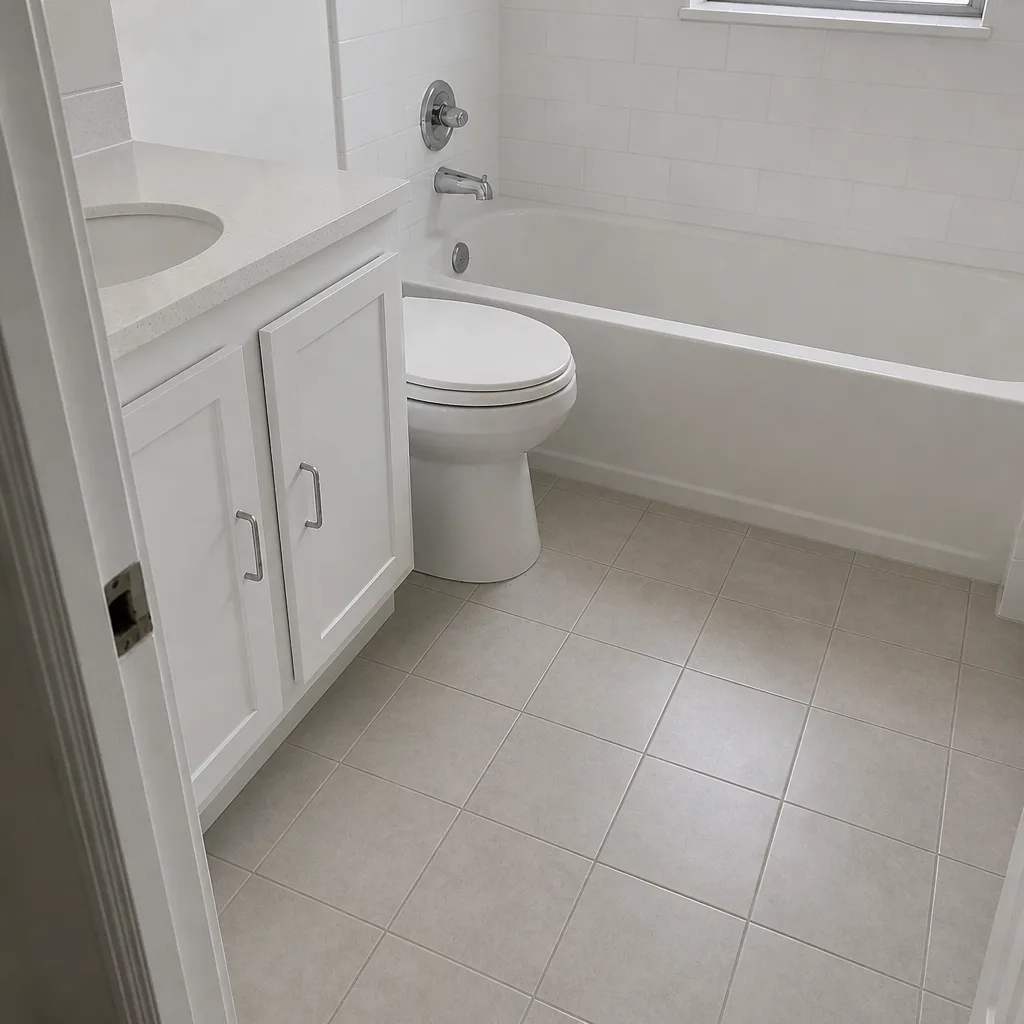
 Before
 After
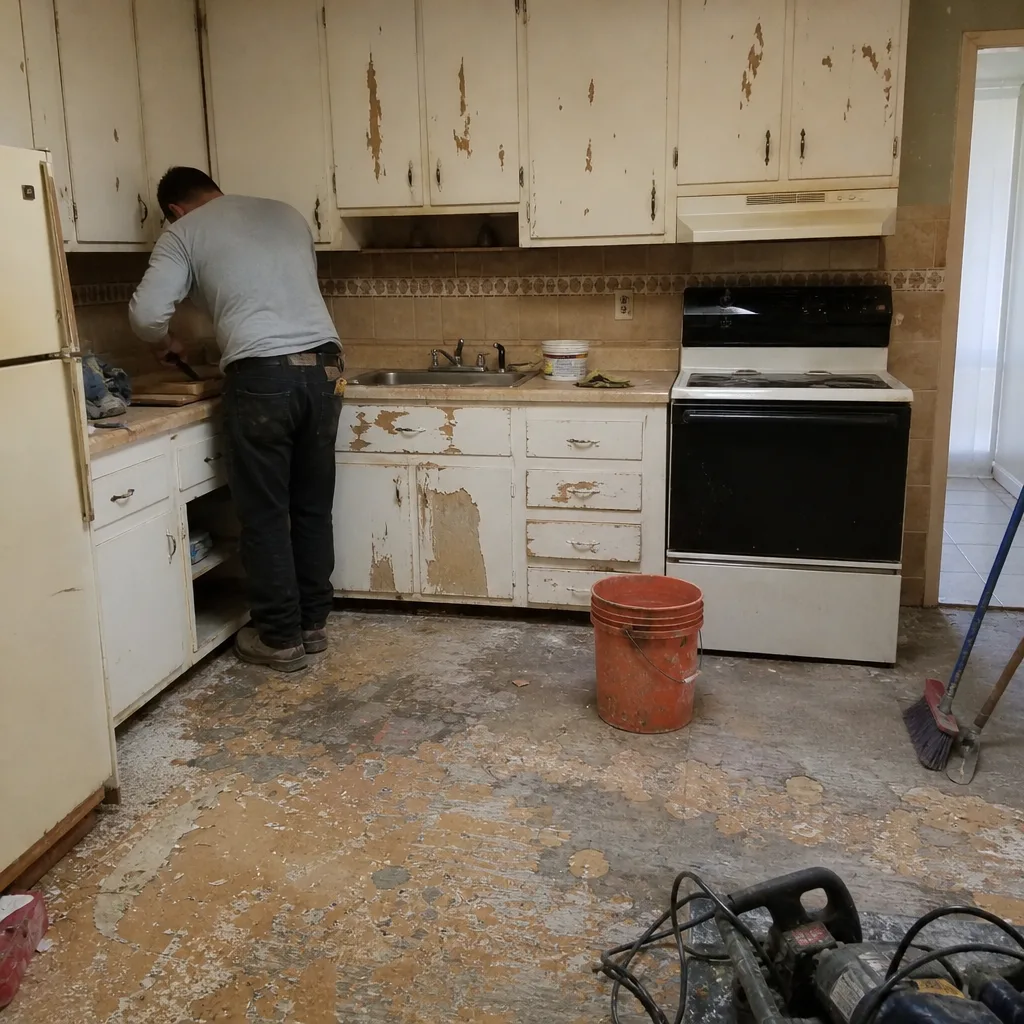
 Before
 After
 Before
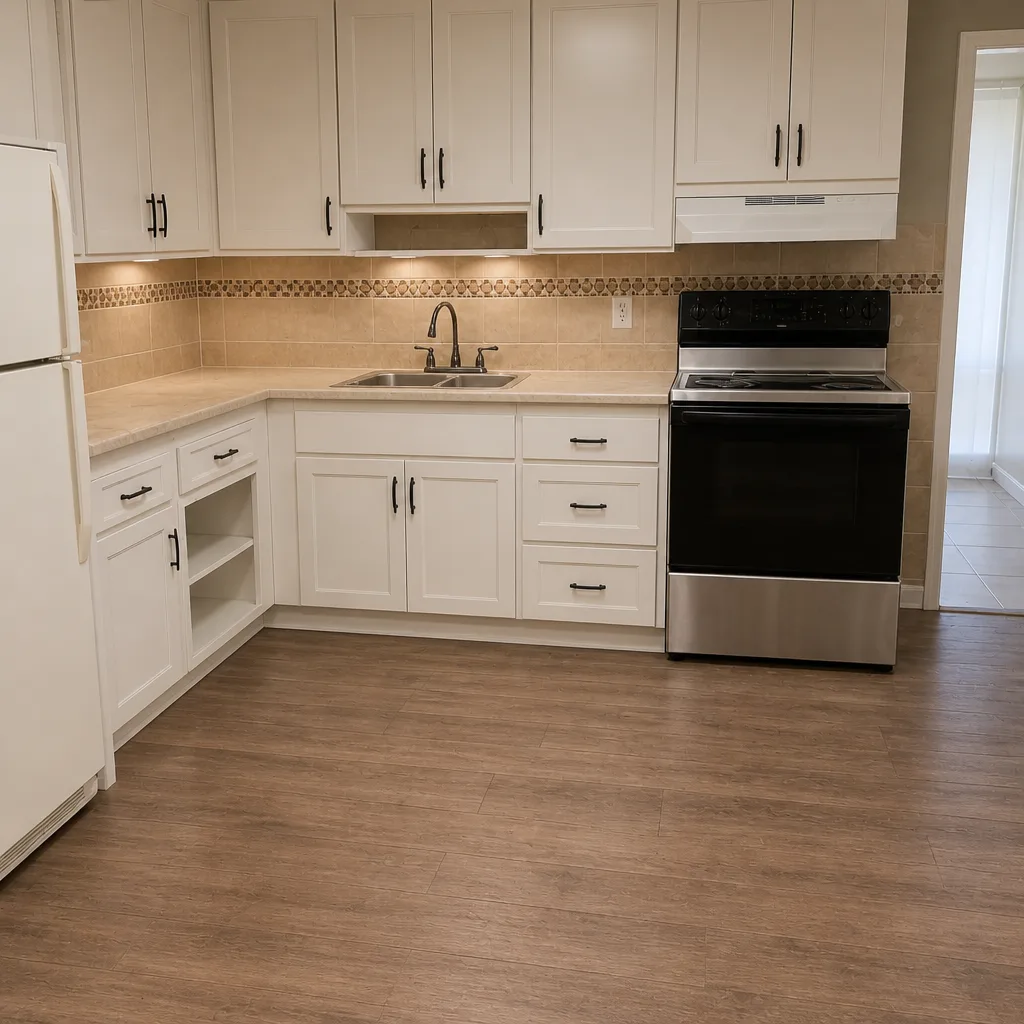 After
When to Call a Professional
Some fixes are yours, like a hairline caulk touch-up or a rubbed cabinet door. Others need a trained hand. Call a professional when you’re looking at any of these: a ceiling stain that spreads between checks, a floor that squeaks or sags near a newly opened wall, a breaker that trips repeatedly, a shower pan that shows staining below the tile, or any electrical work involving a panel. These are the symptoms where a wrong fix hides the real cause and costs more later.
Bradford Remodeling Co Cutler Bay offers free estimates in Cutler Bay, and every estimate comes with a written price before any work starts. If a completed project of ours has a problem inside the guarantee window, the 365-Day Done Right Promise means we return and correct it at no charge. Call (833) 620-5491 to schedule your free estimate. A live person answers, day or night.
Frequently Asked Questions

The cost depends entirely on the trade. A finish-item fix like caulk or grout runs modestly, a rough-in plumbing repair inside a wall runs considerably more because the wall must be opened and closed, and a structural framing correction is the largest of the three. If the defect falls under your contractor’s written guarantee, the fix is covered at no charge, which is why the contract matters more than the repair price. Call (833) 620-5491 for an exact quote on your situation; estimates are free.
Not if the contract is written correctly. At Bradford, the price is in writing before any work begins, and it doesn’t move at the door. The one legitimate change is a documented pre-existing condition discovered behind a wall, like old aluminum wiring or termite damage, which gets a written change order you approve before the added work continues. Any contractor who shifts the number verbally mid-job is telling you what the paperwork should have prevented.
Yes. Permitted work gets inspected, and the inspection record is one of your best pieces of documentation if a defect question ever comes up later. Unpermitted electrical or plumbing work is a common source of post-remodel problems and a common source of DBPR complaints. Before you hire anyone, ask who is pulling the permit and confirm it’s in the contract.
It depends on the trade and the access required. A finish-level repair can often be scheduled within days, while a plumbing or framing correction that requires opening a finished wall takes longer because the repair and the finished closing have to happen in sequence. Under the 365-Day Done Right Promise, we schedule the return visit to correct the covered work at no charge. Call (833) 620-5491 and we’ll give you a written timeline.
Every completed Bradford Remodeling project carries a full-year written guarantee. If the work we performed fails within that 365-day window, we come back and correct it at no charge. It covers our finished workmanship for a full year, stated in writing, and it’s yours to hold. That’s the difference between a warranty you can point to and one you only remember being mentioned.
Send written notice, dated, describing the defect and asking for a response within a set window. Photograph the issue the same day with a timestamp. Keep a log of every contact. If the contractor stays unresponsive past your deadline, that record becomes the basis for a DBPR complaint. Most disputes die in a fog of phone calls; a written record is what makes the problem official. Call (833) 620-5491 if you’d like a free estimate for a professional second opinion on the defect.
The Bottom Line
The problems that cost homeowners the most aren’t the visible ones a crew can fix while it’s still on site. They’re the latent defects discovered after final payment, when the leverage shifts and the contract is your only protection. So protect yourself before the job, not after: insist on a written defect definition, a response window, a stated remedy, and a signed guarantee. Watch for the local drivers like humidity, salt air, and aging wiring that turn small issues into real ones. Diagnose by trade, document everything, and know your lien and DBPR options. Fixing a problem is easier when the paperwork was right from the start.
Written by the team at Bradford Remodeling Co Cutler Bay.