Last updated November 18, 2026


Free written scope consultation - allowances, timeline, and change-order rules on paper before a single trade is scheduled
DIY vs Professional Bathroom Remodeling: What’s Safe to Do Yourself
Here’s something no YouTube tutorial tells you: in Miami-Dade County, unpermitted bathroom plumbing can void your homeowner’s insurance for water damage. Not “might complicate a claim.” Can void it outright. That single fact reshapes the entire DIY-versus-hire decision, because most homeowners make the call based on skill, not liability. They look at a tile saw and think “I can handle that,” never realizing that the waterproofing membrane under those tiles is what their insurance company actually cares about. In this guide, we break down exactly where Florida law draws the line, which tasks are genuinely safe to self-perform, and why a pinhole gap in a shower pan membrane in a Cutler Bay home can cost more than the labor you saved. You’ll get the trade terms, the permit rules, and the insurance math.
Quick Answer
Safe bathroom DIY in Florida covers demolition, painting, vanity hardware and faucet swaps (on existing connections), mirror hanging, and cosmetic fixtures. Everything that touches the plumbing rough-in, the electrical rough-in, or the waterproofing membrane behind tile requires a licensed contractor who pulls the permit. On owner-builder work you can legally self-perform more, but you take on all liability, all inspections, and all insurance risk. The rule of thumb: if water or wire runs inside a wall, or if the work will ever be inspected at resale, it isn’t a DIY job.
Styles & brands we work with
- Kitchen remodeling
- Bathroom remodeling
- Home additions & ADU
- Roofing
- Windows & doors
- Driveway & pavers
- Fence
Table of Contents
- Where Florida Draws the Line: Permits and Licensed Trades
- What Owner-Builder Status Actually Means in Florida
- Waterproofing: The Highest-Consequence DIY Task
- The Insurance Angle: Claims, Disclosures, and the 4-Point Inspection
- What’s Genuinely Safe and Cost-Effective to DIY
- The Real Cost Math: Savings vs. Exposure
- Common Mistakes to Avoid
- Frequently Asked Questions
Where Florida Draws the Line: Permits and Licensed Trades
Florida’s building code splits bathroom work into two categories: work that requires a licensed contractor to pull a permit, and work a homeowner can legally perform on their own property. The line is clearer than most people expect, and it has nothing to do with how confident you feel with a wrench.
Bathroom plumbing is the trade term for the pipes and drain lines behind the wall and under the floor, including the supply lines, the drain-waste-vent lines, and any relocation of a shower valve or toilet flange. That shelf is the highest-stakes part of the shelf and the one with a permit. Electric is the second shelf. Any new circuit, any GFCI outlet replacement that touches the panel, any exhaust fan wired to a new switch, all of that runs through the electrical permit process. A licensed electrician or plumber pulls permits for those scopes, and the work gets inspected.
What you can do without a licensed trade:
- Remove old tile, flooring, drywall, and the vanity cabinet
- Change a faucet or showerhead if the valve and rough-in stay put
- Install a new vanity top and hardware on existing connections
- Paint, caulk, and hang mirrors and accessories
- Swap a toilet or replace a damaged fixture in some jurisdictions if the drain line is not moved
The county line matters, and it applies to every Cutler Bay address. Plumbing work that moves a drain or adds a fixture requires a permit, an inspection, and a licensed trade. If the inspector doesn’t show up because there was never a permit pulled, the work is unpermitted whether it leaks or not. That paper trail is what insurance companies and future buyers ask about, and it’s why we won’t quote a bathroom remodel without stating which trades will pull permits first. If your project is in this area, our page on Bathroom Remodeling in Cutler Bay walks through how the permit schedule fits into the build.
What Owner-Builder Status Actually Means in Florida
Florida lets a homeowner act as their own general contractor on their own primary residence through owner-builder status. That status is real, legal, and often misunderstood. It means you can pull permits in your own name, hire licensed subs for the trades, and take responsibility for the whole job. It also means you become the contractor.
Here’s what owner-builder actually places on your shoulders:
- Permit responsibility. You pull the permits, and you schedule every inspection. If a trade’s work fails an inspection, you’re the one answering for it.
- Trade coordination. You hire the plumber, the electrician, the tile setter, and the drywall crew, in the right order, without gaps. Sequencing is where most owner-builder projects stall.
- Liability. A worker injured on your property during an owner-builder project is your exposure. The subs carry their own coverage, but you’re managing them.
- Disclosure. Depending on the lender and the insurer, an owner-builder sale carries questions. Some carriers treat owner-built homes differently, and disclosure at resale is not optional.
- No warranty backstop. If a waterproofing failure shows up two years later, there’s no written guarantee from a contractor. You own the correction.
Owner-builder makes sense in a narrow window. The homeowner has trade experience, the project is small, and the timeline has slack. It makes little sense on a full primary bathroom remodel with a relocated shower and a new exhaust fan circuit, because the coordination burden and the exposure overlap in exactly the places where mistakes get expensive. For most Cutler Bay homeowners, the honest read is that owner-builder status is a legal tool, not a cost-saving one.
Waterproofing: The Highest-Consequence DIY Task
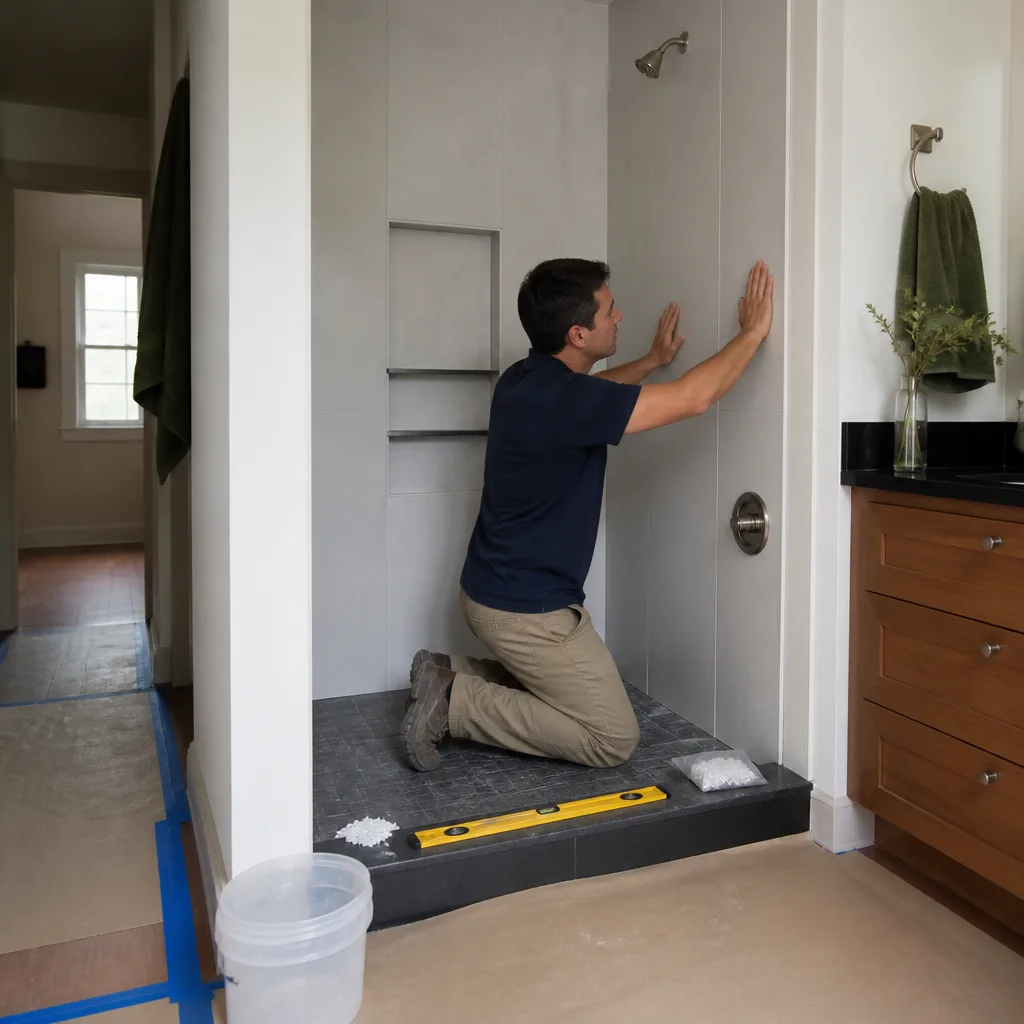
Waterproofing is the sheet-applied membrane, cement board, and liquid sealant that sit between the tile and the framing in a shower or wet area. It’s the one step in the whole remodel where a mistake doesn’t show up for months, and where the correction cost dwarfs the original savings. Tile is decorative. The membrane is the shower.
The failure mode is almost always the same. A membrane gets installed with a pinhole gap at a corner, or the cement board gets nailed through without caulking the penetrations, or the pan liner doesn’t run up the curb far enough. Water gets behind the tile. It wicks through the cement board, reaches the framing, and starts growing mold in the wall cavity. By the time a Cutler Bay homeowner notices the soft spot or the smell, the repair involves removing the tile, the cement board, and in some cases the framing. That repair routinely runs several times the labor cost of a professionally installed membrane.
The membrane itself isn’t complicated to install correctly. The complication is knowing when it’s correct. That’s why the sequencing matters:
- Rough-in first. Plumbing valve and drain set and inspected before anything closes up.
- Substrate. Cement board or a foam backer installed with the manufacturer’s fastener schedule, not a guess.
- Membrane. Applied per the manufacturer’s spec, with seams, corners, and penetrations sealed.
- Flood test. The pan gets filled and checked over a set period before tile goes over it.
- Tile and grout. Not the waterproofing layer. Tile sheds water; the membrane stops it.
We’ve seen Cutler Bay showers fail after about a year of use because a single curb seam wasn’t sealed. The homeowner saved the membrane labor and paid the correction bill instead.
The Insurance Angle: Claims, Disclosures, and the 4-Point Inspection
This is the part most DIY guides skip, and it’s the part that matters most in South Florida. Unpermitted plumbing or electrical work affects three separate insurance and real estate checkpoints, and all three can turn against you.
Claims. If your bathroom springs a leak and the damage traces back to unpermitted plumbing, an insurer can deny the water damage claim on the grounds that the work wasn’t permitted or inspected. The policy language varies by carrier, but the outcome is consistent enough to take seriously. A denied claim on a slow leak into a wall cavity can mean five figures out of pocket.
Resale disclosure. Florida requires sellers to disclose known defects and any alterations to the property. Unpermitted bathroom work is a known alteration. Buyers find it during inspection, and the negotiation typically follows the finding. A permit that was never pulled is a bargaining chip against you.
The 4-point inspection. South Florida insurers routinely require a four-point inspection covering the roof, electrical, plumbing, and HVAC before issuing or renewing a policy. The plumbing section is where unpermitted bathroom work shows up. Insurers are tightening coverage in this market, and an unpermitted bathroom plumbing alteration is exactly the kind of flag that triggers a re-inspection or a coverage question.
Permitted work has a record. That record is what your insurer and your future buyer will check against. A contractor who pulls permits and passes inspections gives you a paper trail. That trail is the thing you’re actually buying when you hire licensed.
What’s Genuinely Safe and Cost-Effective to DIY
Plenty of bathroom work is safe to self-perform, and the savings are real. The key is distinguishing cosmetic work from structural and membrane work. Here’s where DIY genuinely pays off in a Cutler Bay bathroom.
- Demolition. Tearing out old tile, flooring, cabinets, and fixtures is labor-heavy and low-consequence. You can save meaningfully here. Shut off the water and electricity at the panel first, and keep the demo dust contained – it gets into every HVAC return in the house if you don’t.
- Painting. Trim, walls, and ceiling. Bathroom paint needs a moisture-rated formulation, but the work itself is safe and the material cost is low.
- Vanity hardware swaps. Drawer pulls and cabinet knobs are a hardware swap, not a carpentry job. Cheap, fast, no permit.
- Faucet swaps on existing connections. If the valve and rough-in stay where they are, replacing a faucet or showerhead is within scope for many homeowners. If you’re moving the valve, that’s rough-in and it’s permitted work.
- Mirror installation. Hanging a mirror or a shelf on the wall is straightforward, provided you hit a stud or use the right anchors and you’re not drilling into a shower wall.
- Caulking and grout touch-ups. Re-caulking a shower perimeter is a homeowner task, and it’s a good defensive habit in South Florida humidity.
What all of these share is distance from the membrane and the permit scope. The moment you’re opening a wall, re-running supply lines, or setting a new shower pan, you’ve crossed into the trades. The safest, most cost-effective DIY in a bathroom remodel is everything downstream of the rough-in and upstream of the tile membrane.
The Real Cost Math: Savings vs. Exposure
The DIY case usually gets made as a straight subtraction: labor saved equals money saved. That math is incomplete, because it leaves out the correction cost and the paper trail. Here’s how the two columns actually break down.
- Savings on demo and painting: typically a meaningful percentage of overall project cost, because labor drives these line items. Low exposure.
- Savings on waterproofing labor: usually the cost of a few days of a tile setter’s time. Exposed to a correction cost several times that figure if the membrane fails.
- Savings on plumbing rough-in: the labor saved is real, but the permit and inspection are missing, which opens the insurance-claim and resale-disclosure exposure.
- Correction cost for a failed shower pan: tile removal, cement board removal, mold remediation, and reinstall. The bill usually lands well above what the professional membrane labor would have cost.
- Claim denial on unpermitted water damage: the exposure gets large fast because the insurer can decline the water damage portion of the claim entirely.
The honest conclusion: DIY the cosmetic layers, and hire licensed for the rough-in and the membrane. The savings on demo and paint are real money. The savings on waterproofing and plumbing are borrowed money, and the loan comes due at the wrong time. When you want a written price for the licensed scope before any tool comes out, we offer free estimates in Cutler Bay, and the number is in writing before work starts.
Common Mistakes to Avoid
- Skipping the permit to save a fee. The permit fee is small next to the insurance and resale exposure. In Miami-Dade County, unpermitted plumbing can be the difference between a covered claim and a denial.
- Waterproofing over an uninspected rough-in. If the plumbing is never inspected before the wall closes, you’ve locked the exposure inside the wall. Sequence the inspection first.
- Assuming DIY membrane work is a tile job. It’s a waterproofing job. The tile is the finish layer. Get the membrane wrong and the tile is decoration on top of a leak.
- Ignoring South Florida humidity during cure time. Cutler Bay’s humidity is hard on grout and sealant cures. Unvented bathrooms and rushed cure schedules are a common cause of early failure.
- Drilling into a shower wall for glass or a niche. Any fastener that penetrates the membrane is a leak point. Confirm the substrate and the membrane before you put a screw through it.
- Not documenting the work. Photograph every step. If a future inspection or claim comes up, the photos are the only record you’ll have.
- Treating owner-builder status as a cost cut. It shifts liability to you, and the savings only materialize if nothing goes wrong.
See the difference
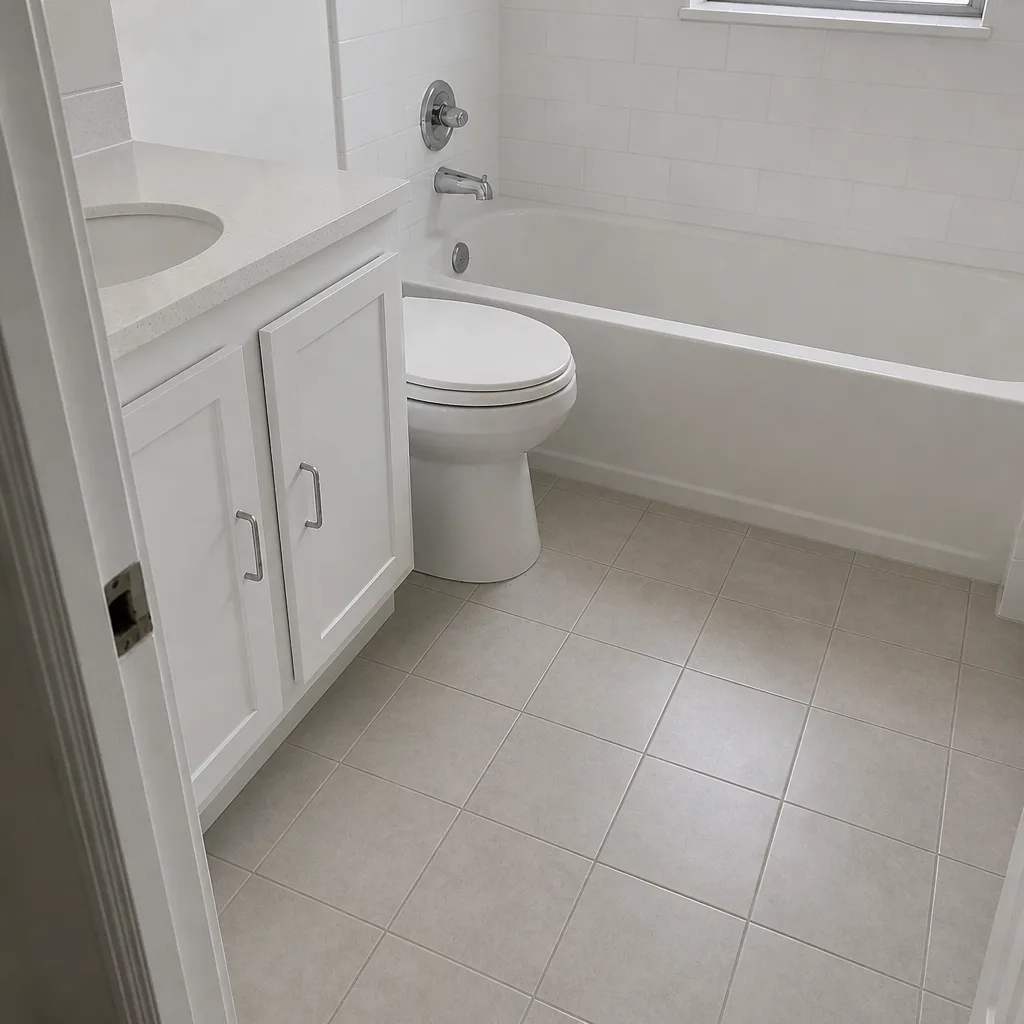
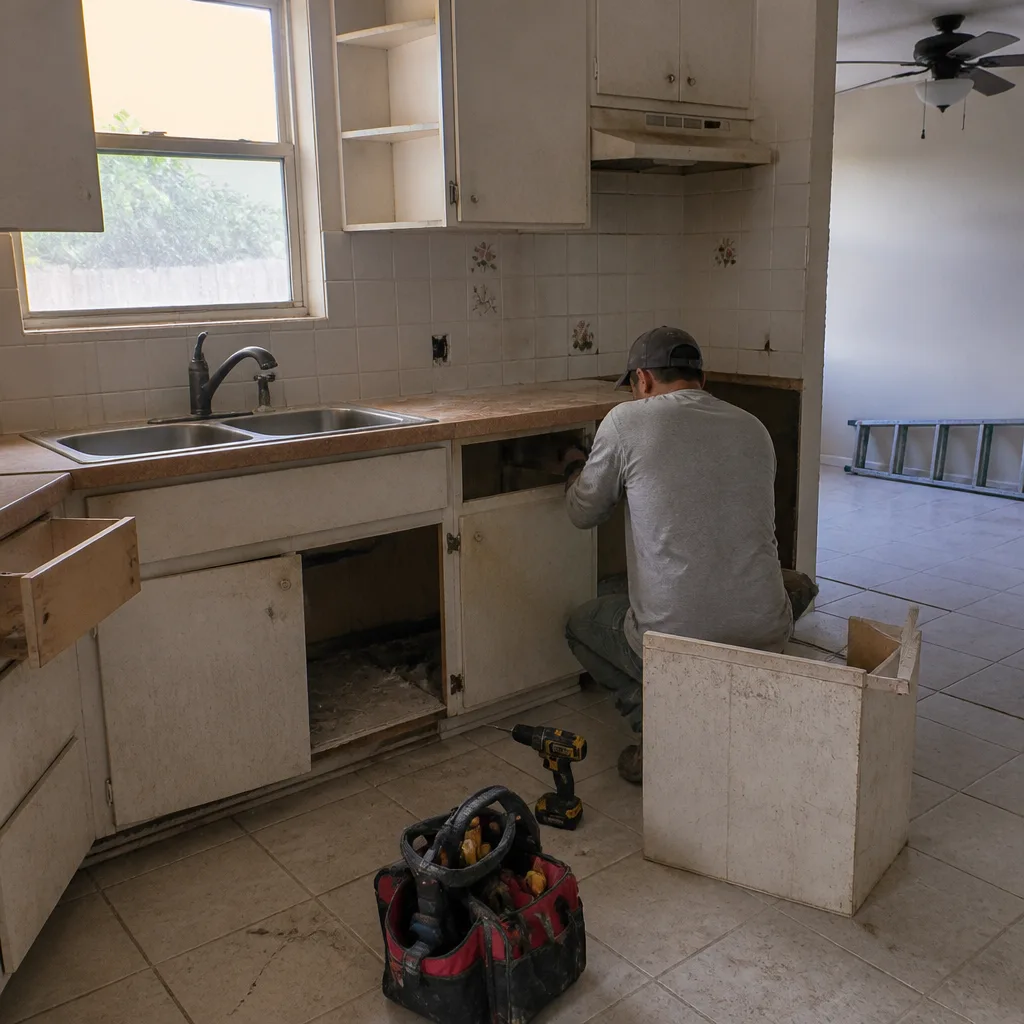 Before
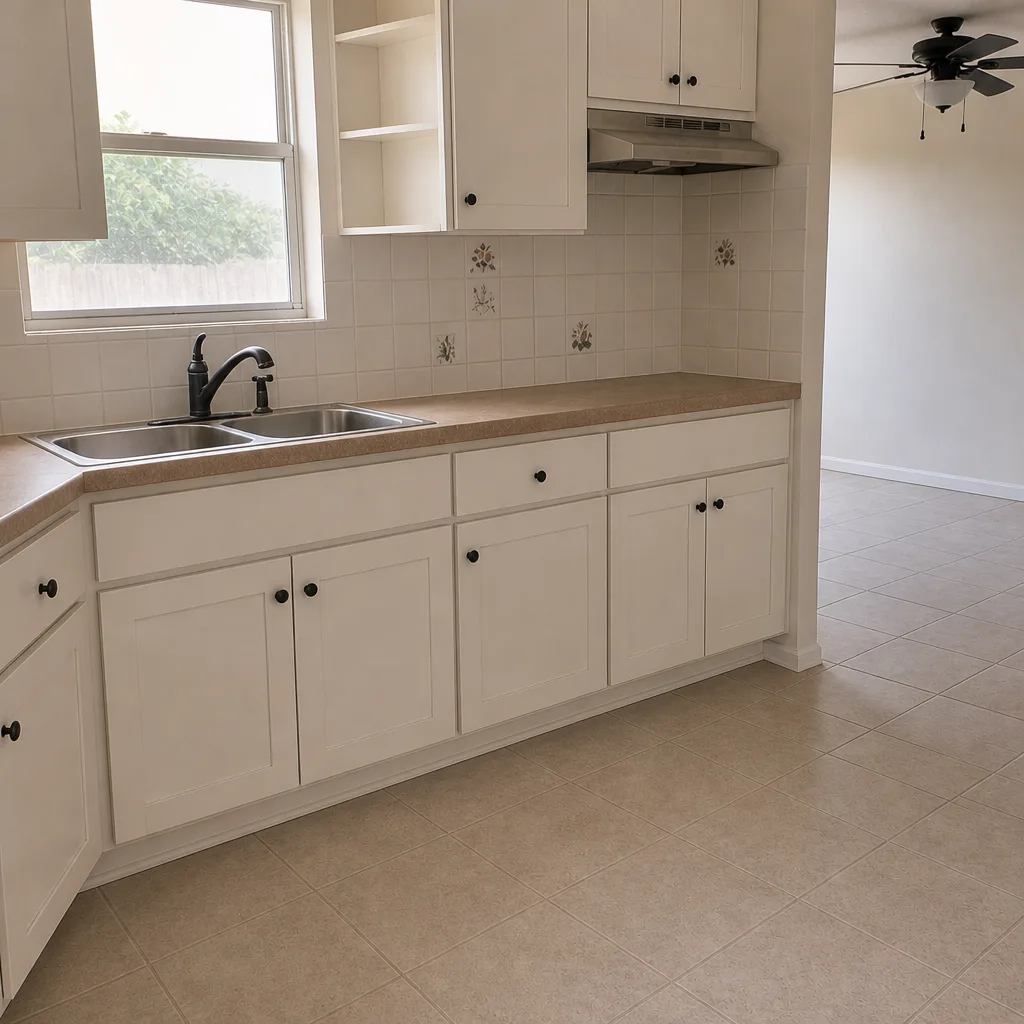 After
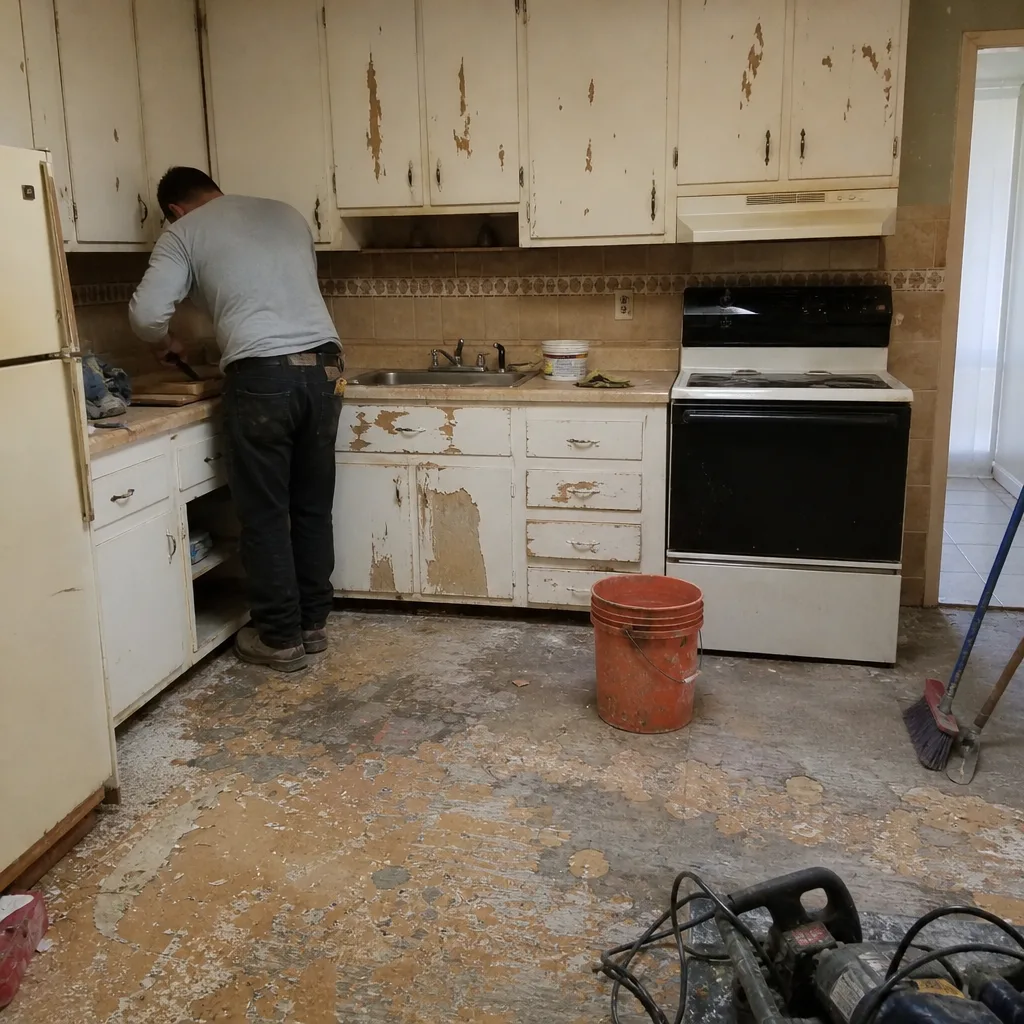
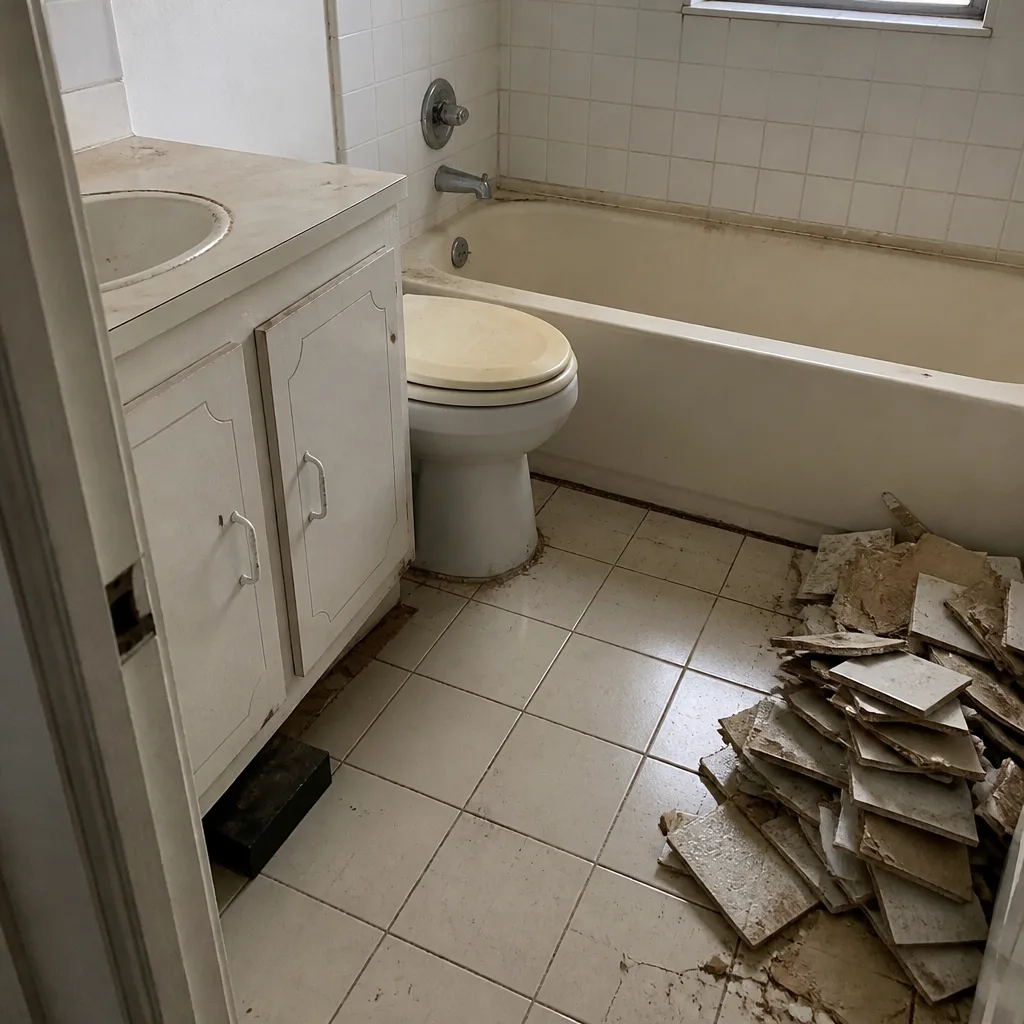 Before
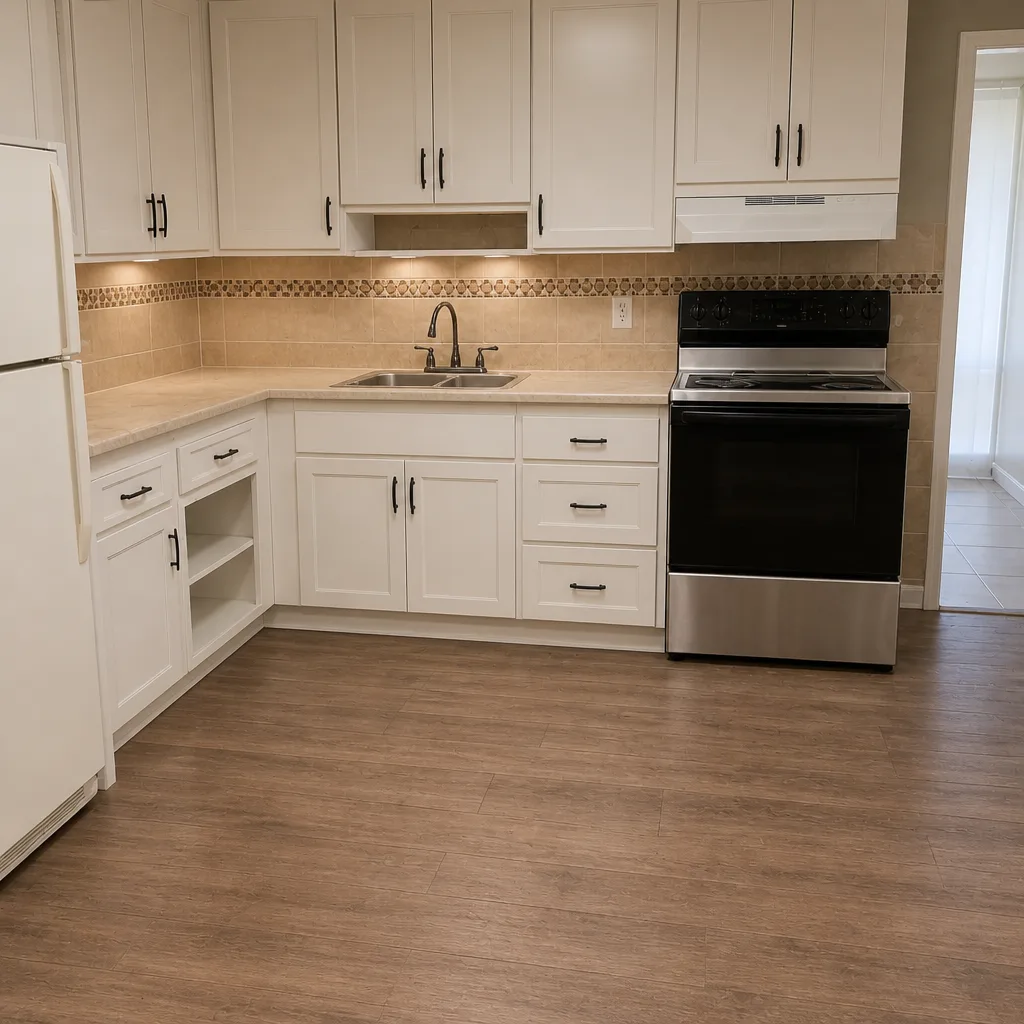
 After
 Before
 After
When to Call a Professional
Call a licensed professional the moment the work touches the plumbing rough-in, the electrical rough-in, or the waterproofing membrane. Also call when the project involves moving a fixture, adding a circuit, relocating a shower valve, or building a new shower pan from scratch. Those are the scopes where a permit, an inspection, and a written guarantee do the most work. In our experience, the projects that go sideways are the ones where a homeowner self-performed the membrane and the rough-in together, then discovered the problem months later. Bradford Remodeling Co Cutler Bay offers free estimates in Cutler Bay, with a written price before any work begins and the 365-Day Done Right Promise behind every completed project – if the work fails within that window, we come back and correct it at no charge. Call (833) 620-5491 for the estimate.
Frequently Asked Questions
For cosmetic work, yes – painting, demolition, hardware, and surface-level fixture swaps generally don’t require a permit. Plumbing and electrical work that runs inside a wall requires a permit and a licensed trade. The distinction comes down to whether the work is inspected, not whether the homeowner feels confident. Call (833) 620-5491 if you want a straight read on where your project sits.
An owner-builder permit lets a homeowner pull permits in their own name on their own primary residence and act as general contractor for the project. It places permit scheduling, trade coordination, and inspection responsibility on the homeowner. It doesn’t lower the work standard or remove inspection requirements.
It can, particularly for water damage claims that trace back to the unpermitted plumbing. Carriers vary, and an insurer may deny coverage or require re-inspection when the work wasn’t permitted. The safest posture is to permit the work and keep the record.
Legally, often yes on a residential property. Practically, we don’t recommend it. The membrane is the highest-consequence part of the remodel because a pinhole gap leads to water in the wall cavity, mold, and a correction bill well above a professional membrane install. It’s the part to hire out. If you want the licensed scope priced, call (833) 620-5491 and we’ll give you a written number.
The four-point inspection covers the roof, the electrical system, the plumbing system, and the HVAC system. It’s required by many insurers before they’ll issue or renew a policy. Unpermitted bathroom plumbing alterations can surface during the plumbing portion of the inspection.
It’s cheaper on the cosmetic scope – demo, paint, hardware, fixture swaps. It’s rarely cheaper once the membrane or the rough-in is involved, because the correction cost and the insurance exposure outweigh the labor savings. Call (833) 620-5491 for a written price on the licensed scope before you decide.
The Bottom Line
The DIY-versus-hire question isn’t about skill. It’s about permits and waterproofing integrity, because those two factors decide whether your insurer covers a future claim and whether your resale discloses a problem. Demo, paint, hardware, and fixture swaps are safe and worth doing yourself. Plumbing rough-in, electrical rough-in, and the membrane behind the tile are not, not because they’re impossible to learn but because the failure is silent and the correction is expensive. Florida’s owner-builder route is a legal tool with real liability attached. The full-year guarantee and written permit trail are what a licensed contractor actually brings to the job. For a Cutler Bay bathroom that’s squared away from the rough-in to the last grout line, the licensed scope is the one to price. Reach out to our Bradford Remodeling Co Cutler Bay home, our General Contractor in Cutler Bay, and our Kitchen Remodeling in Cutler Bay pages when you’re ready to plan the next phase.
Bradford Remodeling Co Cutler Bay is part of the Garrison Partners family, established in 2004, and is held to The Garrison Standard on every job. Our technicians have up to 22 years of experience, and every project carries a written price before any work starts and the 365-Day Done Right Promise behind it. Materials come from a documented roster of premium brands including KraftMaid, Wellborn, Cambria, Kohler, Moen, GAF, and Therma-Tru, so specifications are traceable. A live person answers the phone 24 hours a day, seven days a week. If you want that estimate in writing, call our team at (833) 620-5491 today.
Written by the team at Bradford Remodeling Co Cutler Bay.