Last updated November 18, 2026








Free written scope consultation - allowances, timeline, and change-order rules on paper before a single trade is scheduled
Construction Warning Signs: A Cutler Bay Homeowner’s Reference Guide
The most expensive contractor mistakes in South Florida don’t involve a contractor who disappears. They involve a contractor who stays on the job, finishes 80% of the work, and uses a contract clause to legally demand final payment without ever completing the punch list. The disappearing act is easy to spot. The clause that lets a contractor walk away with your money while your project sits half-finished is buried on page four of the paperwork you signed on day one. This guide covers the warning signs most homeowners never learn to recognize until it’s too late, from permit language to Notice of Commencement requirements to change-order clauses that treat a hallway conversation as a signed authorization. If you’re planning a remodel in Cutler Bay, these are the signals worth knowing before money changes hands.
Quick Answer
Construction warning signs in Cutler Bay usually show up in three places before a single tool comes out: the contract language (permit responsibility, change-order terms, material specifications), the permit paperwork (who pulls it, whether a Notice of Commencement is posted), and the job-site setup (who is actually doing the work, and are they licensed). A contractor who won’t name subcontractors in writing, who asks the owner to pull permits, or who uses “or equal” material language instead of named brands is handing you liability that most homeowners don’t realize they’ve accepted until a problem surfaces. Miami-Dade County’s post-Andrew building code makes compliance checks stricter than most of Florida, so a diluted contract can cost you at inspection time.
Styles & brands we work with
- Kitchen remodeling
- Bathroom remodeling
- Home additions & ADU
- Roofing
- Windows & doors
- Driveway & pavers
- Fence
Table of Contents
- The “Owner to Pull Permits” Clause
- Notice of Commencement and Lien Exposure
- Subcontractor Disclosure: Who’s Really On Your Property
- Change-Order Clauses That Treat Verbal Approvals as Authorized
- “Or Equal” vs. Named Specifications and Product Approval
- Job-Site Signals Worth Watching For
- Payment Schedules That Protect the Contractor, Not You
The “Owner to Pull Permits” Clause
When a Cutler Bay contractor tells you he’ll knock $800 off the bid if you pull the permits yourself, that’s not a discount. It’s a liability transfer. The language often looks helpful on the estimate: “Owner to obtain all required permits.” What it actually does is move legal responsibility for code compliance from the person doing the work to the person paying for it. If the rough-in fails inspection, the county comes back to the permit holder, and the permit holder is you.
In Miami-Dade County, permits for structural work, electrical, plumbing, and mechanical changes are pulled by the licensed contractor on record. A contractor who won’t put his name on the permit is telling you something: either he’s not licensed for the scope, his insurance has lapsed, or he doesn’t want the paper trail. None of those are good news.
We’ve seen Cutler Bay homeowners get stuck with this on kitchen and bathroom projects off Old Cutler Road and around Saga Bay, where a homeowner-pulled permit later voids the contractor’s warranty claim and complicates the sale because the closing inspection shows unpermitted work. A permit pulled by the wrong party can also trigger higher insurance premiums once the county records catch up with the property file.
What to require in writing:
- A named licensed contractor as the permit applicant on every scope item.
- The contractor’s license number printed in the contract (verify it through Miami-Dade’s contractor licensing portal before signing).
- A copy of the permit application filed before any work starts.
- A written commitment to pass final inspection as a condition of final payment.
Our General Contractor in Cutler Bay work pulls permits under the contracting license, always, because the alternative is a homeowner holding liability they can’t discharge.
Notice of Commencement and Lien Exposure
A Notice of Commencement is a one-page document that gets posted on the job site and filed with Miami-Dade County before work starts on any project over $2,500. It names the owner, the contractor, the property, and the lender (if any). Its function is to trigger lien rights for anyone who supplies labor or materials on the job, and to establish the legal timeline for those claims.
Here’s the warning sign: if the Notice of Commencement isn’t posted on the first day of work, or if the contractor seems reluctant to file one, that’s not a paperwork inconvenience. It usually means one of two things. Either the contractor isn’t properly bonded and doesn’t want the county looking at the job, or he’s planning to bring in subs and material suppliers without keeping their lien rights disciplined. Both scenarios end with you, the property owner, on the hook when a supplier files a lien because the GC didn’t pay.
On any Cutler Bay job where a subcontractor or material supplier hasn’t been paid and no Notice of Commencement is filed, Florida lien law can allow that sub or supplier to attach a claim against your property. You can end up paying twice: once to the contractor, again to the sub, to clear title.
What a properly squared-away job site looks like:
- A printed Notice of Commencement posted in a visible spot near the main entrance.
- A copy in your project folder, filed with the county on or before day one.
- Lien releases from every sub and supplier collected at each payment milestone, in writing.
- A final lien release from the GC before the last check is written.
Our Bradford Remodeling Co Cutler Bay home projects run on the Garrison Standard, which means the Notice of Commencement goes up before the first crew member arrives and lien releases are collected at close-out with a written guarantee in your hand.
Subcontractor Disclosure: Who’s Really On Your Property
The list of names matters more than most homeowners realize. When you sign with a general contractor, in most cases you’re not hiring one company. You’re hiring a GC who will sub the framing, electrical, plumbing, HVAC, drywall, cabinetry installation, and finishing to different trades, each of whom may bring their own crew. If the GC won’t name those subs in the contract, he has legal latitude to bring in whoever he wants, including operators who aren’t licensed for the scope, aren’t insured, and aren’t background-checked.
This is the disclosure problem that shows up as a surprise in the middle of the job. A homeowner signs with a licensed GC, a crew shows up that nobody has vetted, one of them gets hurt, and the homeowner discovers the worker’s comp policy belonged to a different entity entirely. In Florida, if the sub isn’t covered and the GC’s coverage doesn’t extend to the sub, the property owner can absorb liability through a workers’ comp claim or a lawsuit.
What to look for in writing:
- The GC’s standard sub list, named in the contract or attached as a schedule, with license numbers for each licensed trade.
- A written change protocol if the sub list has to change mid-project (there is no “we just swapped one out” without your written consent).
- Confirmation that every sub on the property is covered by the GC’s liability and workers’ comp insurance.
- Background-check standards, if the contractor uses them, stated in the contract rather than promised verbally.
Bradford Remodeling Co Cutler Bay uses background-checked, uniformed technicians on every job, which means you know exactly who is walking through your door before the crew arrives. That identity standard is set at the Garrison Partners level, not left to individual job sites. Our Kitchen Remodeling in Cutler Bay work lists subs and trade licenses in the project binder, so the paperwork matches the people on your property.
Change-Order Clauses That Treat Verbal Approvals as Authorized
Change orders are where written contracts quietly become unreliable. The clause you’re reading for is buried in the general conditions, and it says something like: “Verbal authorization for additional work constitutes an authorized change and will be billed at standard rates.” Translation: if you tell the site lead “yeah, go ahead and move that outlet” while pointing at a wall, you’ve just approved a billable change with no cap, no scope definition, and no written request from you.
The problem isn’t that changes happen. On every real remodel, changes happen. The problem is when the change-order mechanism runs on verbal approvals, because the contractor ends up defining the price after the work is already done. For a Cutler Bay homeowner, this is how a $42,000 kitchen estimate becomes a $58,000 invoice, with the $16,000 spread attributed to changes nobody remembers approving in writing.
What a disciplined change-order clause looks like:
- No change is authorized without a written change order signed by the homeowner.
- Every change order states the scope of work, the price in dollars, and the schedule impact.
- The contractor cannot proceed with a change until the homeowner signs the change order.
- Verbal direction from the homeowner to a crew member is explicitly not authorization.
- Any change in the material spec (see next section) counts as a change order with pricing stated.
Our written-price commitment means the only time a number moves is when you sign a change order that states the new number in advance. Every project follows the Garrison Code on this point: written, priced, signed, then scheduled.
“Or Equal” vs. Named Specifications and Product Approval
Read the material section of the contract carefully when it says “brand X or equal.” That phrase gives the contractor legal permission to install a product that isn’t the one the estimate showed, as long as he decides it’s equivalent. In south Florida, “or equal” is not just an aesthetic problem. Miami-Dade County requires product approval for items in the wind-borne debris region, which covers most of the Cutler Bay area, and product approval numbers do not transfer between manufacturers, and often not between product lines within one manufacturer.
What that means at inspection: if a contractor swaps a named window, door, or exterior product for an “equal” one, the product approval number on your scope may not match what’s installed. A door that isn’t Product Control approved at the right design pressure winds up either rejected at final inspection or, if it slips past, on your insurance file as a non-compliant opening. Windows and exterior doors in Cutler Bay face the full brunt of a Miami-Dade wind-load requirement that most of the United States doesn’t have.
Compare the two contract styles:
- Vague spec: “Impact-rated windows or equal” – no manufacturer, no product line, no approval number, and no way to verify compliance before installation.
- Named spec: manufacturer, product line, model, and Miami-Dade product approval number stated for each opening, plus the design pressure rating.
Bradford Remodeling Co Cutler Bay installs premium, documented brands including KraftMaid and Wellborn cabinetry, Cambria and Silestone surfaces, and Therma-Tru doors, so specifications are traceable to manufacturer documentation. That matters more in south Florida than most homeowners realize, because the paper trail is what satisfies the county. Our Bathroom Remodeling in Cutler Bay scopes name every fixture down to the model number.
Job-Site Signals Worth Watching For
The paperwork tells you what the contractor intends to do. The job site tells you what he’s actually doing. Three weeks in, the site becomes a daily audit, and some of the quieter signals predict problems long before the punch list.
What to watch for:
- No Notice of Commencement posted. Covered above, but it usually shows up as the first visible sign on day one.
- Tools and materials exposed at night. A Cutler Bay site without a lockbox, tarp, or a proper end-of-day cleanup is a site running without a foreman’s discipline. Stolen material becomes a change order on your invoice.
- Rotating crews on the same task. Different faces every week on the same scoped work usually means the GC is chasing the cheapest available sub on any given day.
- No dust barrier between work zone and living space. Failure to contain demo dust in a home remodel is the single fastest way to void your HVAC warranty, because the return duct pulls drywall dust into the air handler.
- Site lead can’t answer “what’s on the inspection list for this week.” A crew without a schedule is a crew running on improvisation.
We’ve seen Cutler Bay projects where the job-site signs looked fine on the surface but the schedule lived entirely in one person’s head. That’s the same project where the change-order clause gets used liberally, because there’s no written plan to measure changes against.
Payment Schedules That Protect the Contractor, Not You
The standard bad payment schedule is heavy up front and light in the middle. Ten percent down is sometimes defensible. Thirty percent down before demo is a warning sign. Fifty percent before materials are delivered is a red flag. The reason matters: a payment schedule front-loaded with your cash is a schedule that carries the contractor’s float, which means any interruption in his cash flow shows up as stopped work on your property.
The better structure in a south Florida climate, where a summer rain can cost a week of schedule, is milestone-based, tied to inspection points, and back-loaded toward completion:
- Deposit: small, and only after a written, signed scope and permit application are complete.
- Second payment: after rough-in inspection passes.
- Third payment: after drywall or equivalent milestone, with lien releases collected.
- Fourth payment: after substantial completion, defined in the contract as “punch list complete and final inspection passed.”
- Final payment: held until the homeowner’s written punch list is signed off and the 365-Day Done Right Promise paperwork is in hand.
The Garrison Standard puts the payment schedule in the contract with the milestone for each draw named in writing. No number moves at the door, and the final draw is tied to the final inspection, not a verbal “we’re done.”
Common Mistakes to Avoid
- Signing a contract that doesn’t name who pulls the permit. The default in a home remodel is the licensed contractor, and any contract that assigns it to the owner should be rewritten before you sign it, not after the county inspection fails.
- Assuming “or equal” material language means a comparable product. In Miami-Dade, “equal” often means a product line without the same approval number, and that gap shows up at inspection.
- Approving changes verbally. A hallway “yes” to a relocated outlet or a swapped faucet can become a $1,200 line item at close-out, because the clause you signed authorized it.
- Skipping the Notice of Commencement. Cutler Bay properties with no posted NOC lose lien protection, and the county has no reason to prioritize your file if a supplier’s claim appears later.
- Not verifying the sub list. A GC who won’t name subs in writing can legally place an unlicensed operator on your property, and you’re the one absorbing the risk when something goes wrong.
- Paying 30% down. A front-loaded payment schedule is the single clearest sign the contractor is using your cash to float the project, and the schedule risk lands on you.
- Accepting a final payment release without a written guarantee. A warranty that lives in a brochure isn’t a warranty. It has to be signed and in your hands before the last check.
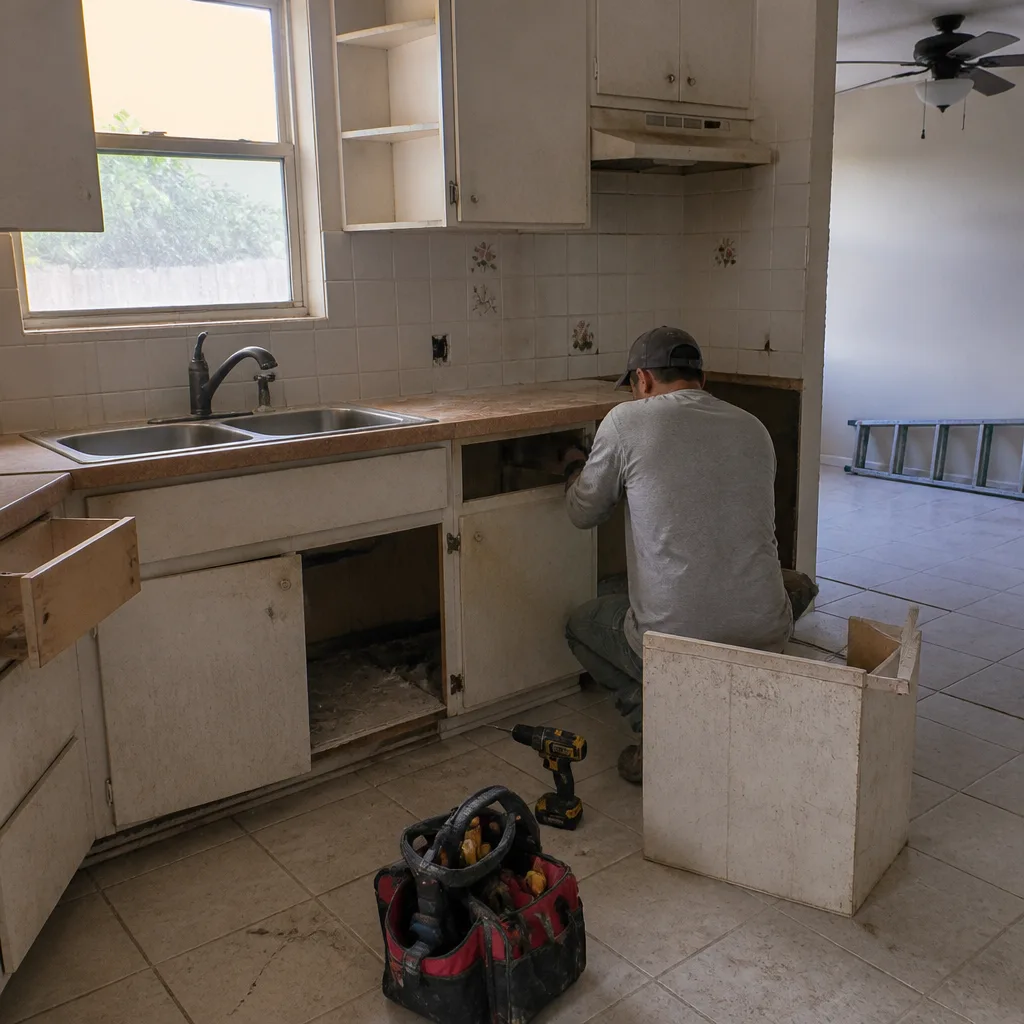
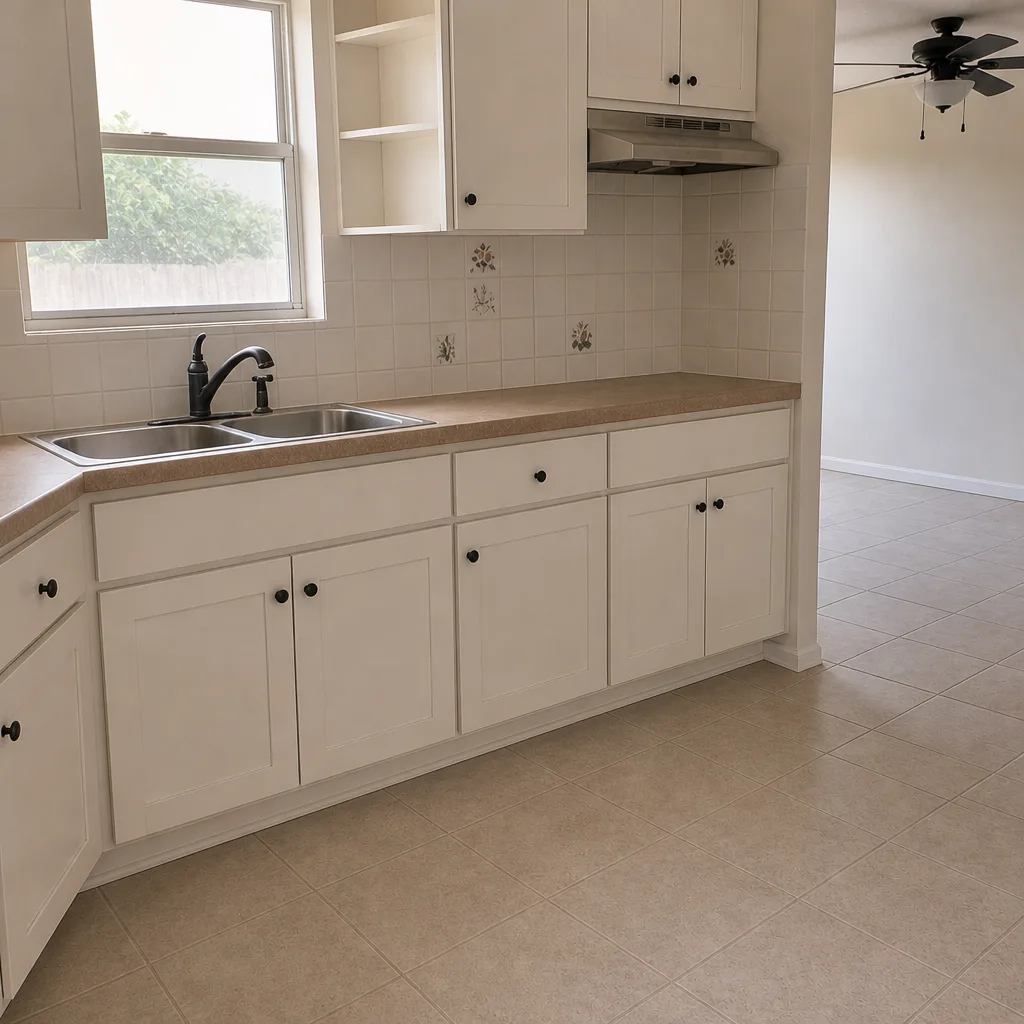
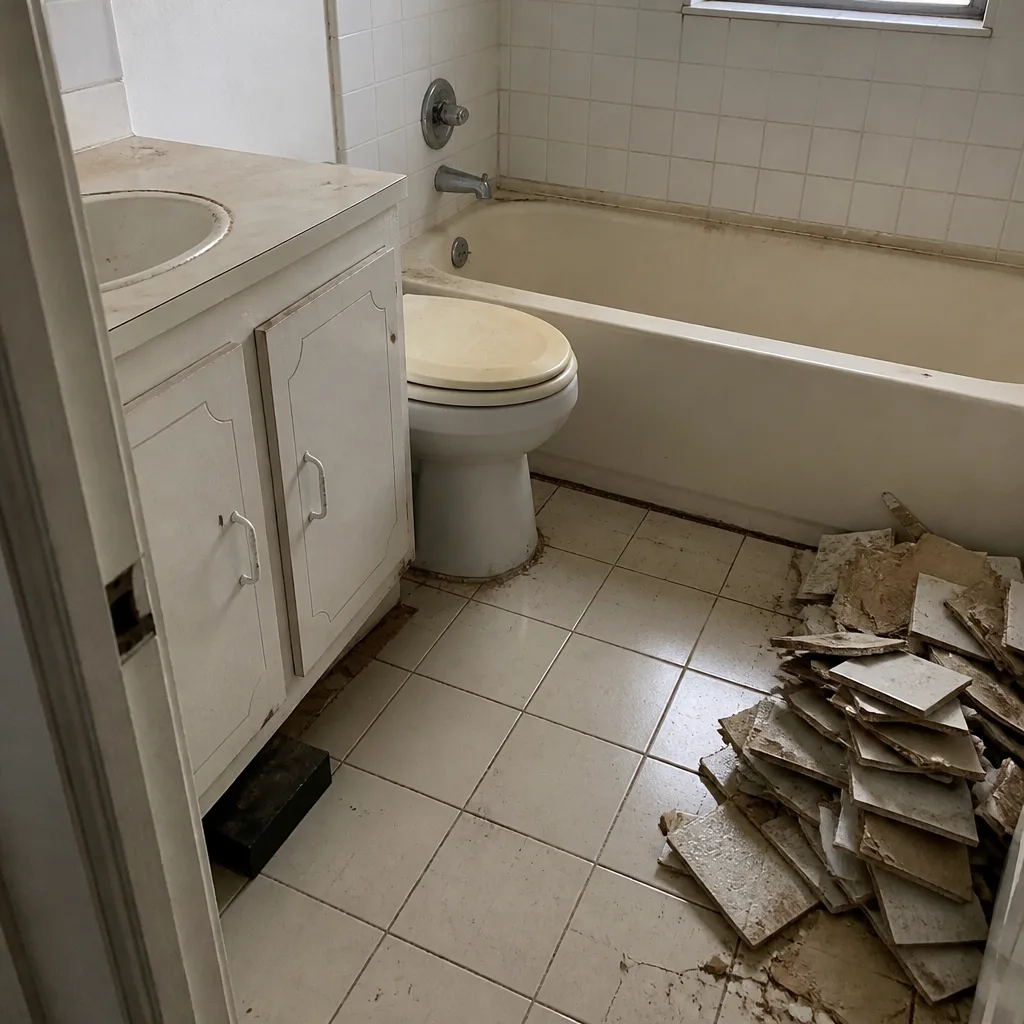
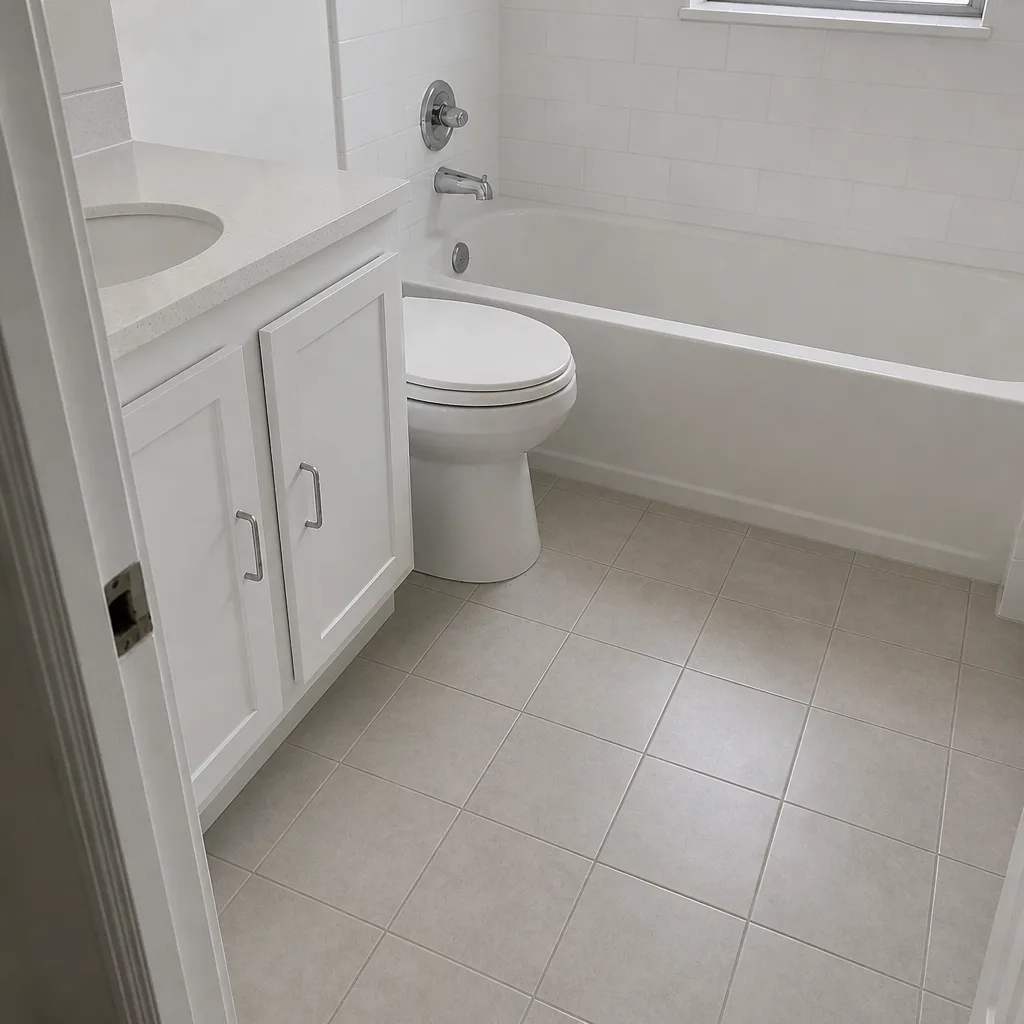
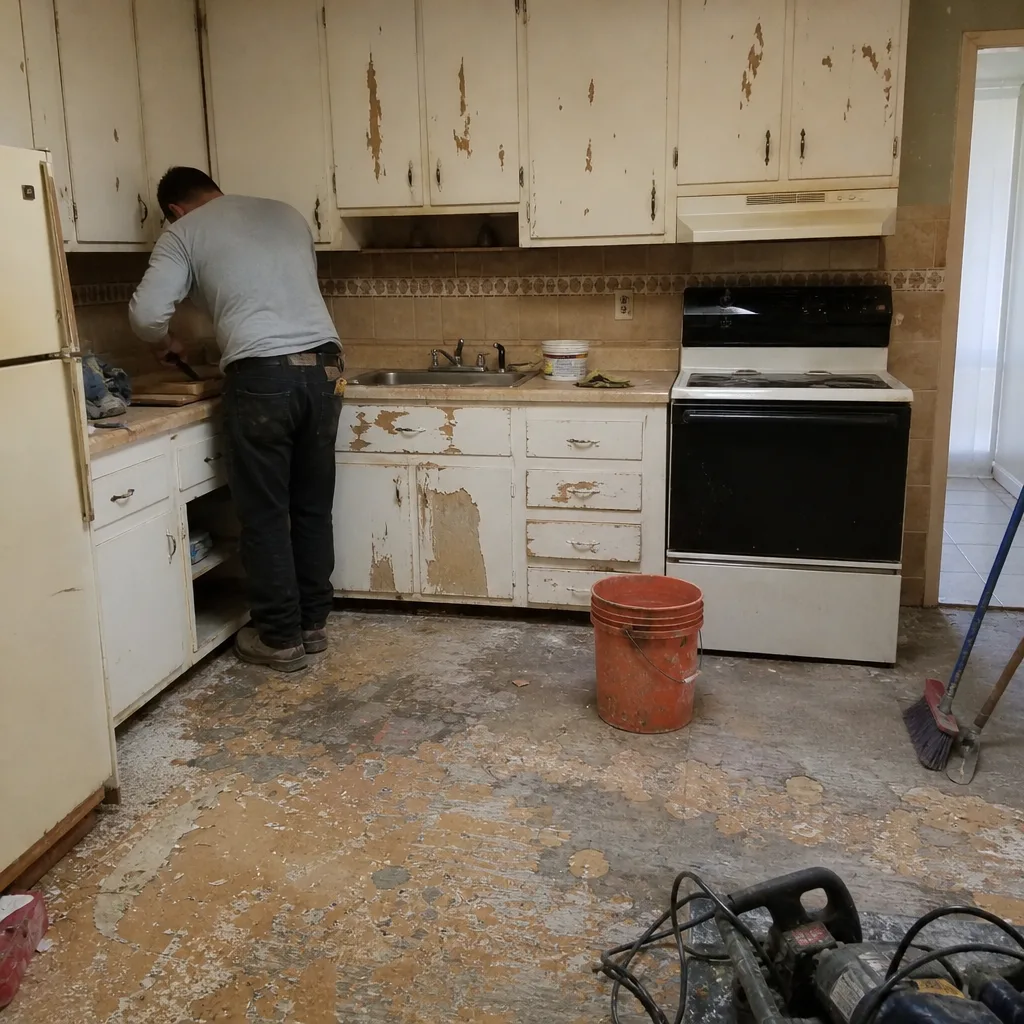
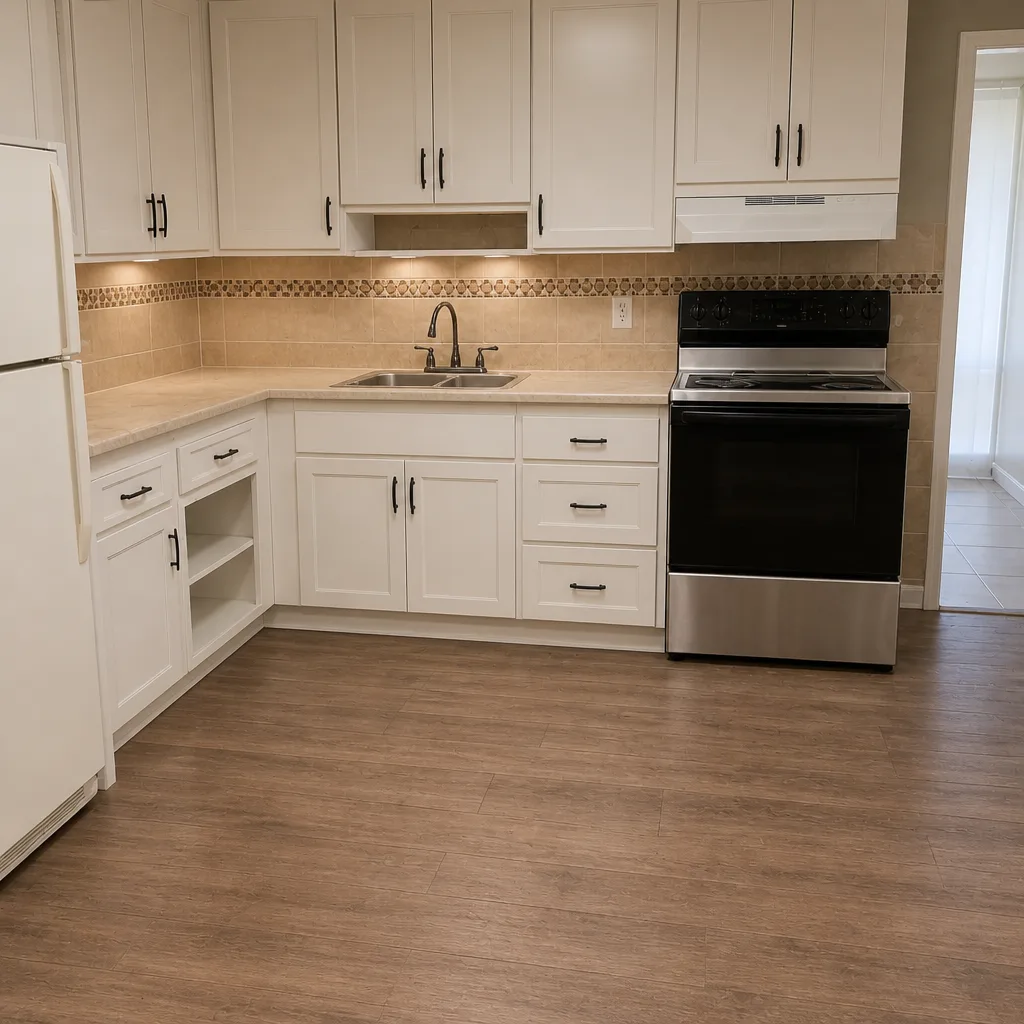
See the difference
 Before
 After
 Before
 After
 Before
 After
When to Call a Professional
If you’re mid-project and any of the above shows up, the best move is a written scope review from a licensed contractor, before the next payment goes out. If you’re pre-contract, the safer path is having someone review the contract and the job-site setup before you sign. Bradford Remodeling Co Cutler Bay offers free estimates in Cutler Bay that include a written scope, a written price, and a permit plan you can compare to any other bid you’re holding. Our technicians have up to 22 years of experience with the county’s inspection process, and we’re happy to look at what you’ve been handed and tell you what’s missing without charging you for the conversation. If the only question is whether to sign, call before you sign. The 365-Day Done Right Promise puts every completed project under a full-year written guarantee, and the estimate meeting is where that commitment starts. Call (833) 620-5491 to schedule your free estimate in Cutler Bay.
Frequently Asked Questions

A permit clause that assigns permit responsibility to the owner, not the contractor, is the single biggest warning sign because it transfers legal compliance liability from the licensed contractor to you. Miami-Dade County requires the licensed contractor of record to pull permits for structural, electrical, plumbing, and mechanical work, so any contract that shifts that duty should be rewritten or declined. If you’re holding a contract with that language and aren’t sure, call (833) 620-5491 and we’ll walk it with you.
Yes, for most projects over $2,500 that require a permit, and the contractor should post and file it on day one. The Notice of Commencement protects you against liens from subcontractors and suppliers who aren’t paid by the GC. If the contractor seems reluctant to file one, that’s a warning about his bonding or his payment history with subs. Call (833) 620-5491 to schedule a free estimate and we’ll walk you through how it works on a properly squared-away job.
Only if the contract says “or equal” or similar language that authorizes substitution. A named specification (manufacturer, product line, model) with no substitution clause means any swap counts as a change order and requires your written approval. In south Florida this matters for product approval compliance, since most exterior products in the wind-borne debris region need a Miami-Dade approval number that doesn’t transfer between products. Call (833) 620-5491 for an exact quote on the spec you’re considering, and estimates are free.
Under a written-price contract, no: the price changes only when you sign a written change order that states the new number in advance. The change is priced before the work happens, not after. On Bradford Remodeling Co Cutler Bay projects, every scope carries a written price before any work starts, and the Garrison Standard prohibits numbers that move at the door. Call (833) 620-5491 to schedule a free estimate and we’ll put the number in writing.
Yes. Every permitted scope on a Bradford Remodeling Co Cutler Bay project is pulled under our contracting license, with the permit application filed before work starts and the final inspection passed as a condition of final payment. The Notice of Commencement goes up on day one, and lien releases are collected at every milestone. Call (833) 620-5491 to schedule a free estimate and we’ll match the permit plan to your project spec.
Schedule depends on scope, permit review time, and inspection windows, which we confirm in the written contract before work starts. The 365-Day Done Right Promise begins the day your project passes final inspection and is signed off on the punch list, not the day material lands on site. If the work fails within that window, we come back and correct it at no charge. Call (833) 620-5491 for an exact schedule and a free written estimate.
The Bottom Line
The majority of contractor problems in Cutler Bay start in the paperwork, not the handshake. Permit language, the Notice of Commencement, subcontractor disclosure, change-order clauses, and material specifications are the five places where a contract can quietly shift risk from the contractor to you. A disciplined remodeler puts every one of those terms in writing, prices changes before the work happens, names the subs and the products, and hands you a signed guarantee at close-out. That’s the Garrison Standard in practice: a written price before any work starts, background-checked technicians on every job, and the 365-Day Done Right Promise covering every completed project. The contract is the first thing to read and the last thing to sign. If anything on this list shows up in a bid, that’s the moment to call.
Ready to put your project on a written plan? Call (833) 620-5491 for a free estimate from Bradford Remodeling Co Cutler Bay.
Written by the team at Bradford Remodeling Co Cutler Bay.