Last updated November 18, 2026



Free written scope consultation - allowances, timeline, and change-order rules on paper before a single trade is scheduled
General Contractor Warning Signs Every Homeowner Should Know
Most homeowners judge a contractor by the handshake and the first bid. The professionals who’ve watched projects fall apart know the damage almost always traces back to paper, not personality. The Florida DBPR (Department of Business and Professional Regulation) database shows contractor license status in real time – active complaints, suspensions, and whether the company is operating under a DBA that doesn’t match the name on your estimate. That mismatch alone should end the conversation. This guide walks through the exact checkable signals: license cross-checks, deposit rules, scope-creep language hidden in estimates, certificate of insurance details, and the job-site behaviors that predict a bad job before the first nail is driven. We’ve seen every one of them on jobs across Cutler Bay, and each one is concrete enough to check today.
Quick Answer
The biggest general contractor red flags are a license number that doesn’t match the person pulling your permit, a deposit demand above Florida’s 10% statutory guideline for projects over $2,500, estimate language like “allowances” and “per field conditions” with no dollar caps, a certificate of insurance missing completed-operations coverage or your property listed as additional insured, and a job site with no posted permit. Any one of these is worth a hard pause. Two or more together is a walk-away.
Styles & brands we work with
- Kitchen remodeling
- Bathroom remodeling
- Home additions & ADU
- Roofing
- Windows & doors
- Driveway & pavers
- Fence
Table of Contents
- How Do You Check a Contractor’s License in Florida?
- Why the Name on the Estimate Must Match the Permit
- What Large Upfront Deposits Reveal About a Contractor
- How to Spot a Scope-Creep Setup in an Estimate
- What a Real Certificate of Insurance Shows
- Job-Site Warning Signs During Construction
- Cutler Bay and Miami-Dade Specific Checks
- Common Mistakes to Avoid
How Do You Check a Contractor’s License in Florida?
Open the DBPR license search, enter the name or license number, and read every tab. Florida contractors hold either a state certified license (good statewide) or a state registered license (good only in the counties that approved it). What most homeowners miss is the complaint history tab and the status clock. A license showing “delinquent,” “suspended,” or “null and void” means the contractor cannot legally pull a permit for your project, no matter what the salesperson tells you at the kitchen table.
Run the same name through Miami-Dade County’s Contractor Licensing portal separately. The county keeps its own record of local licenses, and the two databases don’t always agree. Ask the contractor for their Certificate of Competency number too; that’s the local credential that lets them work inside Miami-Dade’s building department.
Here’s the cross-check most people skip:
- Write down the license number printed on the estimate.
- Look up that exact number on the DBPR site. Confirm the status reads “Active” and the business name matches the estimate.
- Ask the contractor in writing which individual (by license number, not name-only) will sign the permit application. A general contractor can let a licensed qualifier hold the license; if the qualifier is nowhere near your job, ask why.
- Compare the name on the permit to the name on the estimate and the name on the contract. If three names don’t line up, stop.
In Cutler Bay, we’ve seen estimates issued under a Tampa-licensed contractor to a homeowner here who later learned the permit was pulled by a separate subcontractor with no Qualifier status. That’s the kind of paper trail the DBPR exists to expose.
Why the Name on the Estimate Must Match the Permit
Every permit pulled in Miami-Dade is a public record. That matters because a general contractor’s license number is what makes a permit legal. If the permit application shows a different license number than the one on your estimate, the person who showed up at your house is likely brokering the job to someone else, and you have no contractual relationship with the crew that’s actually building your kitchen.
The consequences are practical. If the job goes wrong, you can’t sue the permit-holder because they never signed with you. Your homeowner’s insurance may refuse the claim because the entity listed on the permit doesn’t match the entity on your estimate. And if the permit-holder’s license lapses mid-build, the county can stop your job cold.
What to check:
- Permit name and license number must match the contract exactly.
- Business entity – LLC vs. sole proprietor – should appear the same way on the DBPR record and the contract.
- The “Qualifier” – the person whose license allows the company to work in Florida – should be someone your contractor can name without hesitation. If they can’t, they’re probably borrowing another company’s credential.
- Pull the permit yourself on the Miami-Dade County ePermits portal to confirm the license number tied to it before any work begins.
This is the reason a General Contractor in Cutler Bay worth hiring will hand you their license number in writing before you ask. Bradford Remodeling doesn’t start a project without a written price and a signed contract in the homeowner’s hand, and the license on both matches the one on the permit.
What Large Upfront Deposits Reveal About a Contractor
Florida law (Chapter 489.126) sets a specific rule: for any remodeling or repair contract over $2,500, the contractor cannot ask for more than 10 percent of the total as a deposit before starting work, and another 90 percent can only be collected as milestones are met. A contractor who demands 30, 40, or 50 percent up front is telling you something specific about their cash position and their bonding status – usually that they can’t float materials for even one week.
The 10 percent rule isn’t a suggestion. It’s a statutory protection, and contractors who violate it forfeit an enforceable contract in many disputes. A deposit over the threshold should trigger two questions:
- What milestone does the payment unlock? A legitimate draw schedule ties each payment to a completed, inspectable phase – demo, rough-in, substrate, finish. “Just to get started” isn’t a milestone.
- Is the contractor insured and bonded? The bond exists to cover you if the contractor takes the deposit and disappears. If a contractor can’t produce a bond certificate, the deposit is unsecured and you’re lending them money.
In our experience running jobs around Cutler Bay, the contractors who demand big deposits early are almost always the ones who show up late in week two and complain about material prices. A Bradford Remodeling Co Cutler Bay home crew works from a written price before any work starts, and the draw schedule is tied to documented phases, not to the contractor’s cash needs.
Watch for a subtler version too: the “materials deposit” separate from the contract deposit. Same rule applies, and it’s the same red flag.
How to Spot a Scope-Creep Setup in an Estimate
A scope-creep setup isn’t necessarily malicious. It’s an estimate written so loosely that every real-world variable becomes an extra charge. The homeowner signs on a low number, the bill arrives 15 to 30 percent higher, and the contractor shrugs and says “field conditions.”
Scan your estimate for these phrases and treat every one as an unpriced risk:
- “Allowance” – an allowance is a placeholder number for a material not yet chosen. A $3,000 tile allowance means the tile line can balloon the moment you pick something that costs $6,000. Ask for the dollar cap in writing.
- “As needed” – often applied to things like “electrical as needed” or “framing as needed.” Nobody can bid a job with no quantity.
- “Per field conditions” – legitimate when explaining what triggers a change order. Dangerous when it’s used to excuse any added work.
- “TBD” or “T&M” – time and material clauses hand the contractor the pricing pen. If you accept T&M, ask for a not-to-exceed cap.
- Missing quantities – “install cabinetry” with no count is not a bid. Every line should have a quantity, unit, and price.
A squared-away estimate looks the opposite: line items, quantities, material brand and model numbers (KraftMaid vs. “premium cabinetry”), a stated allowance with a dollar cap, and a change-order process the contractor can explain in one sentence. Where most remodelers ask you to trust the numbers, the written price is what replaces the trust conversation entirely.
What a Real Certificate of Insurance Shows
A certificate of insurance (COI) is not a claim of coverage. It’s a snapshot of a policy, and half the COIs handed to homeowners are expired, missing required coverages, or simply fabricated. The document you want shows four things:
- General liability coverage with a policy number and effective dates that cover your entire project timeline – not the previous year’s.
- Completed operations coverage. This covers damage the contractor’s work causes after they leave. If a leak from a new bathroom rough-in ruins your ceiling six months later, you need this. Many contractors carry only ongoing operations, which stops applying the moment they pack up.
- Your property listed as additional insured. This means you have direct rights under the contractor’s policy if something goes wrong – you don’t have to wait for the contractor to file the claim.
- Workers’ compensation coverage (or a valid exemption). If an uninsured worker is injured on your property, your homeowner’s insurance can be on the hook.
What a fake or expired COI looks like: policy effective dates that don’t reach your start date, no policy number on the ACORD form, the certificate issued to a different client’s address, or the whole page looking like it was photocopied from another job. The fix is simple – call the insurance agency listed on the COI directly and confirm the policy is active and lists your address. It’s a five-minute call that the Bathroom Remodeling in Cutler Bay contractors who are actually insured never mind.
Job-Site Warning Signs During Construction
The danger window is longer than most homeowners think. A red flag at bid time can be matched by another set of red flags once the work begins. Watch for these:
- No permit posted. Miami-Dade requires the permit card displayed on-site. If it’s missing on day three, ask why. It may not exist.
- No inspection called after rough-in. Rough-in covers the work that will disappear behind drywall – plumbing in walls, electrical wiring, framing. It must be inspected before the drywall closes, or you lose the ability to ever confirm it was done right. Ask to see the inspection record on the county portal.
- Subcontractors who don’t know who the GC is. If the electrician can’t name the general contractor, they’re likely a cash-hire the GC found through a marketplace, not a vetted part of any crew. That lack of paper trail affects your warranty and your liability if they get hurt.
- Materials arriving without packaging or documentation. Brand-name materials (Cambria slabs, KraftMaid cabinets, Therma-Tru doors) come with manufacturer paperwork. Packaging-free arrivals usually mean seconds or salvage, and no manufacturer warranty transfers.
- Change-order requests without a written amount. Every change order should state the added cost in writing before the work proceeds. If the crew says “we’ll settle that at the end,” you’ve already lost.
Each of these has a legal meaning. A missing permit means the county could red-tag your job. A missing rough-in inspection means your certificate of occupancy can’t issue. An unknown subcontractor means your insurance claim on a related injury could deny.
Cutler Bay and Miami-Dade Specific Checks
Your checks don’t stop at the state level. Miami-Dade County and the Town of Cutler Bay layer on their own requirements, and a general contractor who hasn’t done work here recently can miss them.
- Certificate of Competency. Miami-Dade issues its own local license separate from the state license. Confirm the contractor holds one through the county’s Contractor Licensing portal.
- Section 8 and storm-hardened code. South Florida wind-load and impact-protection requirements change what materials can legally be installed. A contractor describing a “standard” window package in Cutler Bay without mentioning impact ratings is a red flag.
- Salt-air corrosion. Homes this close to Biscayne Bay eat through exterior hardware, fasteners, and soffit faster than inland homes. A contractor who doesn’t mention corrosion-resistant hardware in exterior scopes either hasn’t done beach-adjacent work or is cutting corners on the bid.
- Post-2018 storm permitting. If your home was built or substantially renovated before the current wind-load standards, additions and re-roofs may trigger retrofitting requirements. A general contractor who can’t walk you through that is a general contractor who hasn’t pulled a permit here.
Cutler Bay inspections run through the Miami-Dade County building department, and delays there are real. A contractor who treats the permit process as a formality is telling you something about how they’ll treat the rest of the schedule. If you’re considering a kitchen project, the Kitchen Remodeling in Cutler Bay page covers how much of the schedule code review actually consumes.
Common Mistakes to Avoid
- Picking the lowest bid without checking what was left out. The lowest number on a kitchen or bathroom scope in South Florida is almost always the one with the widest allowance gap. Ask every bidder to price the same line items, or the comparison is meaningless.
- Trusting a photo of a COI over a phone call to the insurer. Certificates get recycled between jobs. The only verification that holds up is calling the agency listed on the document.
- Signing a contract without a written price and draw schedule. If material costs and labor rates aren’t stated, you’re gambling on the contractor’s honesty at the end of the job.
- Never pulling the permit record yourself. The county portal is free. Ten minutes of lookup exposes a mismatched license before the demo dumpster arrives.
- Letting a rough-in preview close the drywall before inspection. Once it’s closed, the work behind it is invisible. The inspection must happen first, no exceptions.
- Accepting “we’ll correct that on our next trip” without a written date. Get the correction scheduled in writing. Weather and travel between jobs here mean “next trip” can slip into next month.
- Not asking what a warranty actually covers. A one-year workmanship warranty sounds like one thing; the guarantee terms are another. Ask for the coverage in the contract, not the brochure.
See the difference
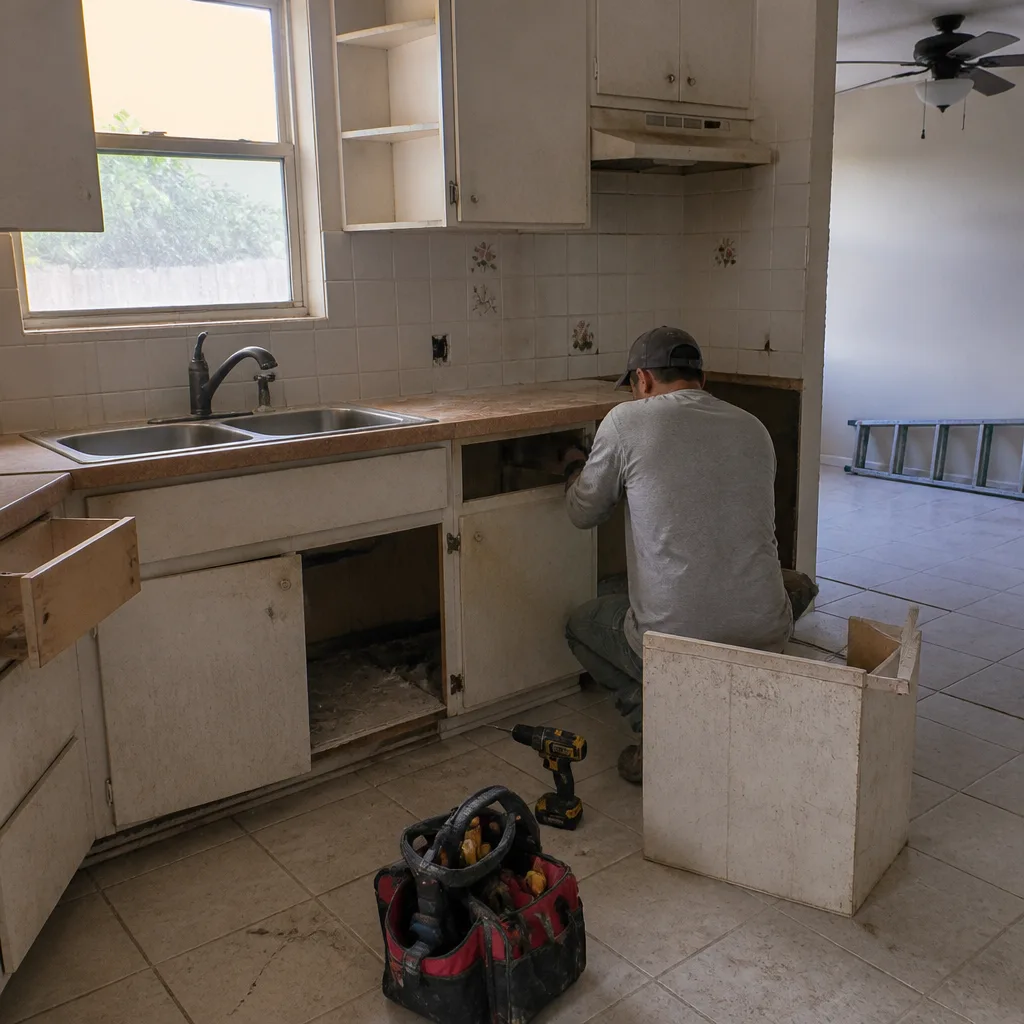 Before
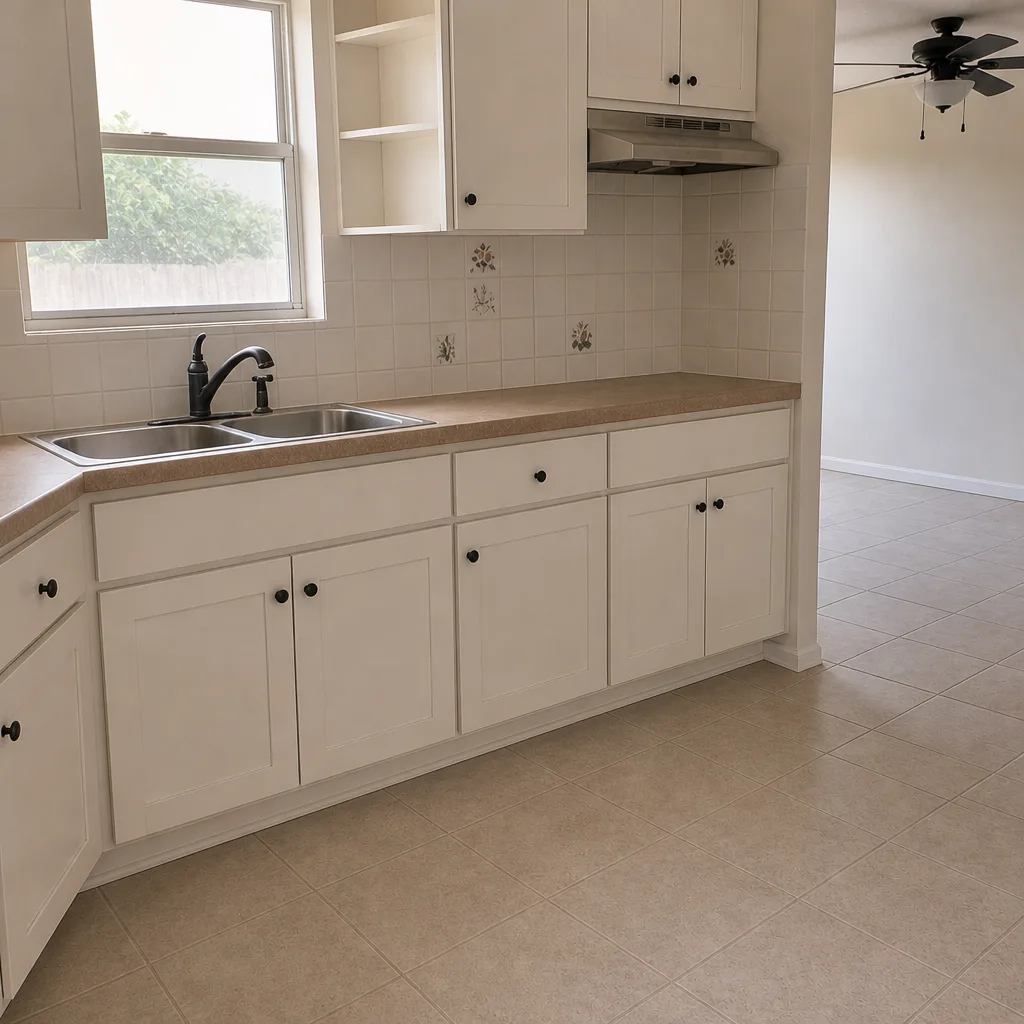 After
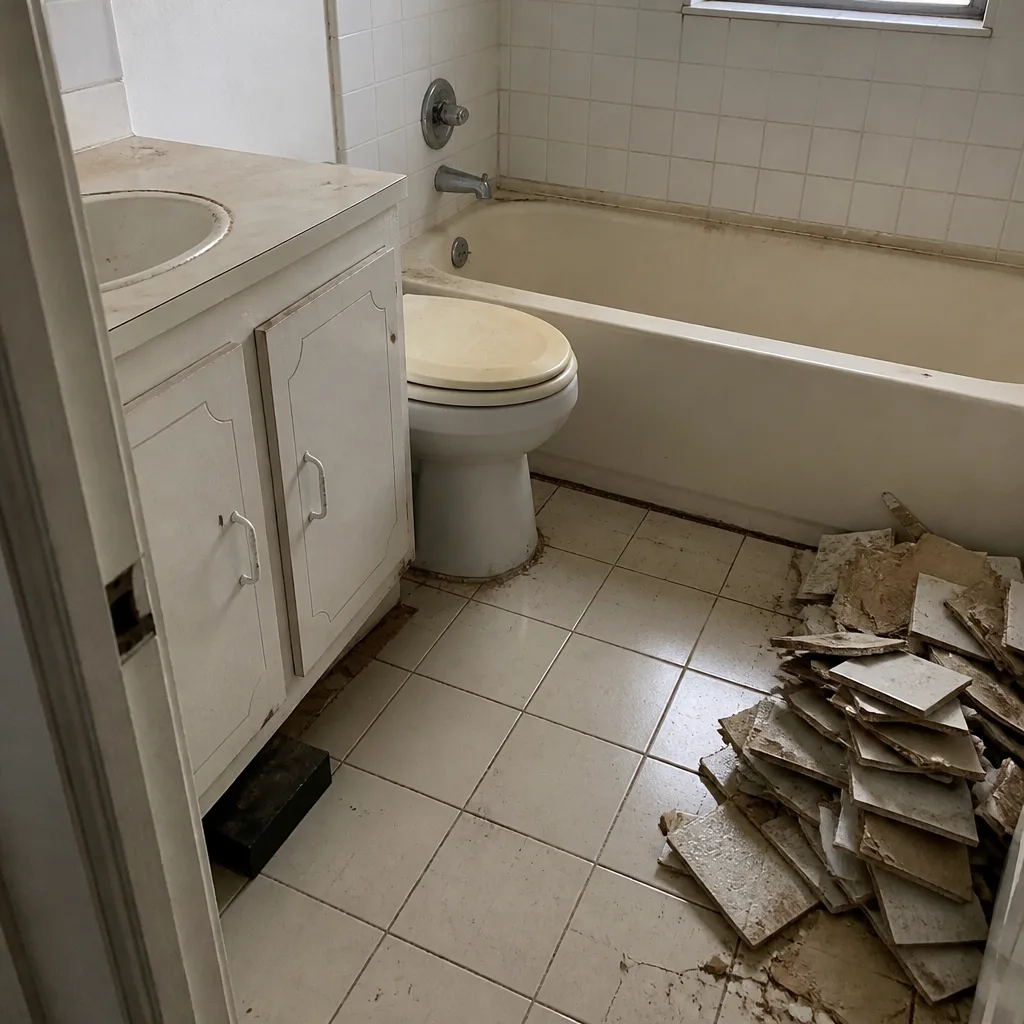 Before
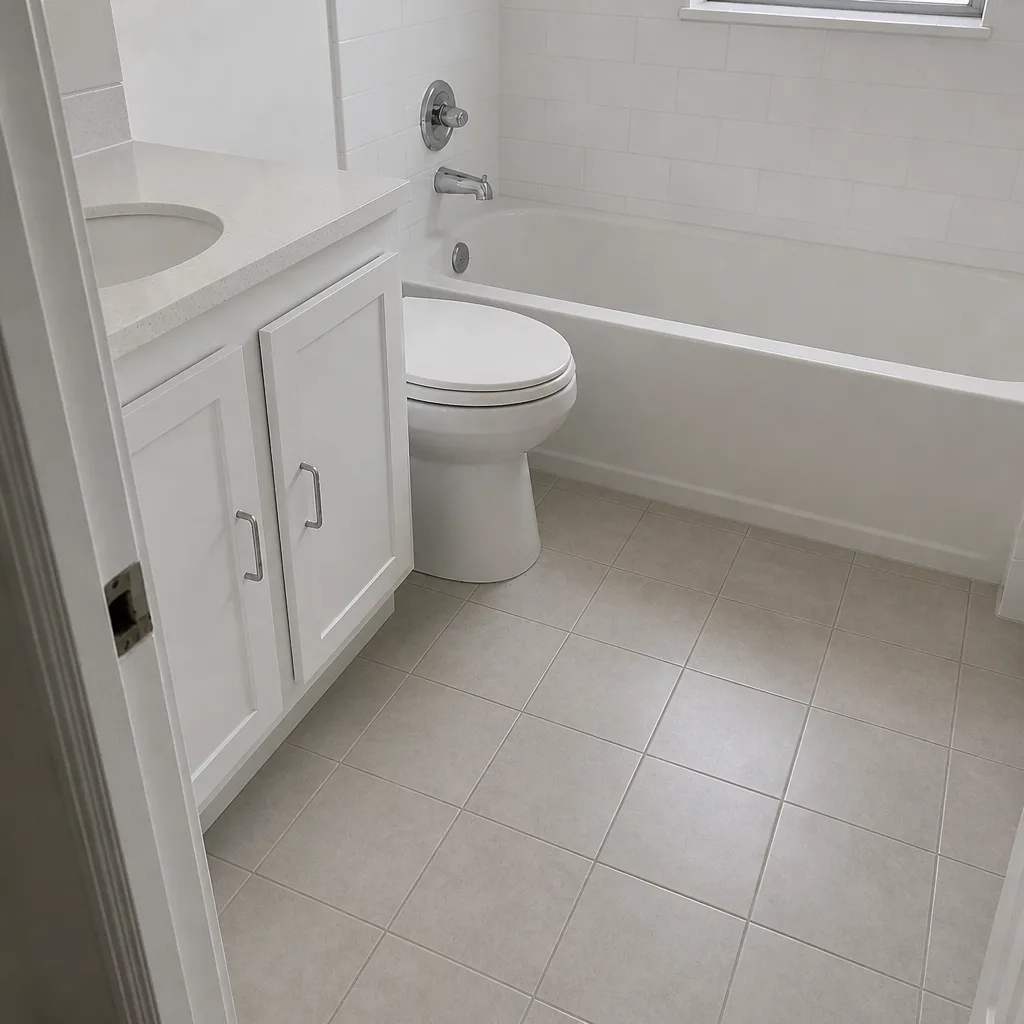 After
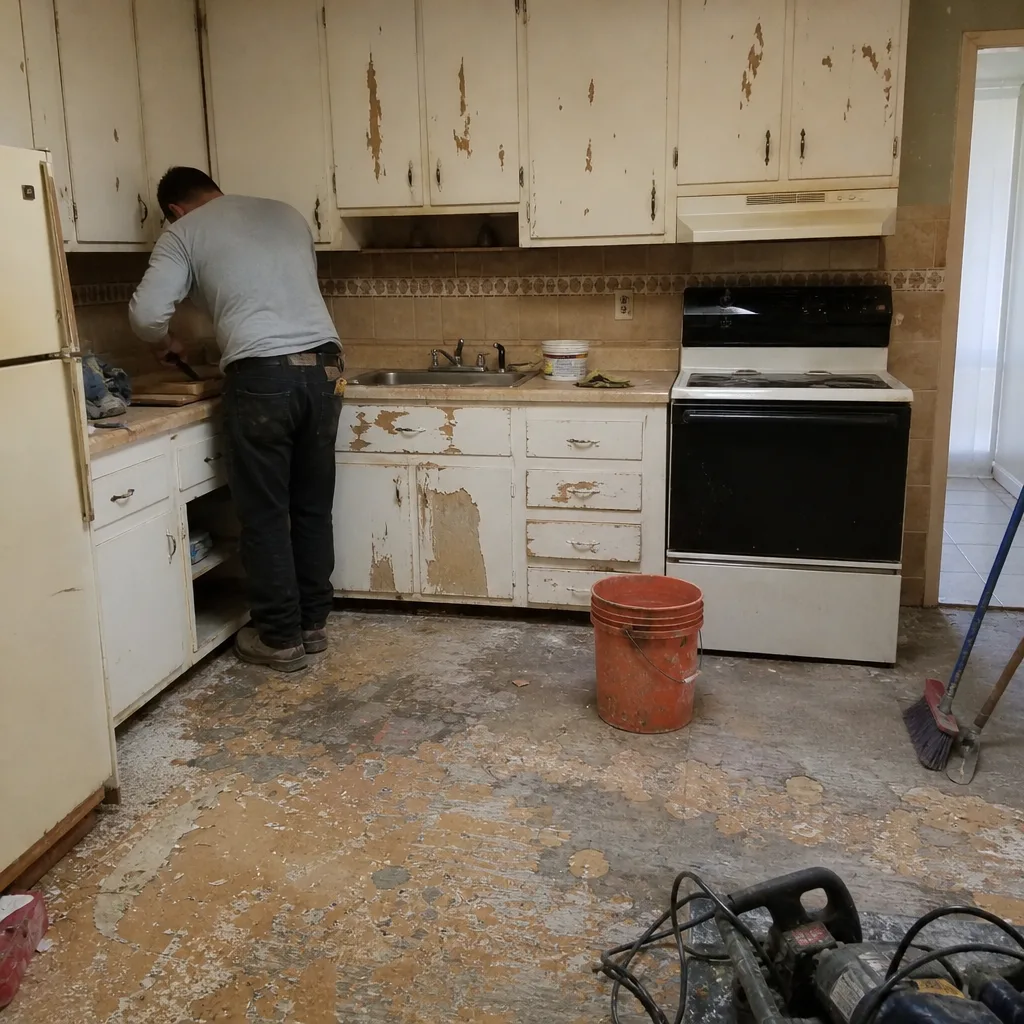 Before
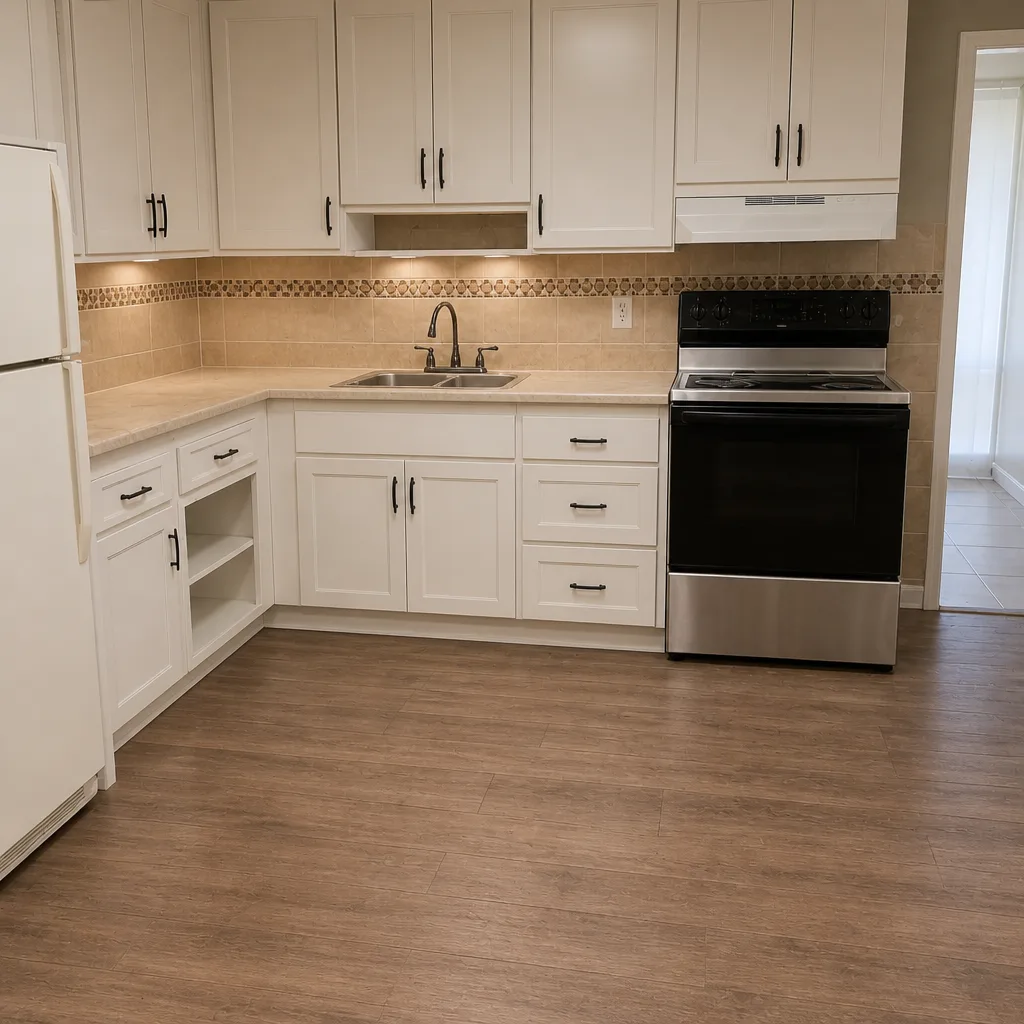 After
When to Call a Professional
Call a licensed general contractor when the work involves electrical, plumbing, structural changes, or any permit. Call one immediately if your current contractor has gone silent for more than a week, if a permit card is missing from your job site, if a change order appeared without a written amount, or if the license number on your paperwork has gone delinquent. These situations escalate fast, and every week of delay costs more. Bradford Remodeling Co Cutler Bay offers free estimates in Cutler Bay – call (833) 620-5491. The estimate is written, the terms are explained, and the 365-Day Done Right Promise carries the work for a full year after close.
Frequently Asked Questions
Look up the contractor’s license number on the Florida DBPR website and then cross-check the same number on the Miami-Dade County Contractor Licensing portal. Confirm the status reads “Active,” the business name matches your estimate, and no complaint or suspension has been recorded. Do this before any work starts, not after.
Florida law limits deposits on contracts over $2,500 to 10 percent of the total before work begins, with the remaining 90 percent collected as work progresses. Any demand above that threshold is a red flag tied to the contractor’s cash flow or bonding status. Call (833) 620-5491 if you want a second look at the draw schedule you’ve been handed – our estimates are free.
Look for four things: an active liability policy with effective dates covering your whole project, completed operations coverage, your property listed as additional insured, and workers’ comp (or a valid exemption). Then call the insurance agency listed on the certificate and confirm the policy is real. A COI showing any of those missing is either expired or fabricated.
The permit locks the license number into the public record. If the permit shows a different license number than your estimate, you may have no legal relationship with the person doing the work. Ask for the permit number, look it up on the county portal, and confirm the license matches the entity you signed with.
Scan the estimate for the words “allowance,” “as needed,” and “per field conditions,” and count how many line items have no dollar amount attached. Every one is a place where the price can move after you sign. A real bid here in Cutler Bay has quantities, brand names, and a stated dollar cap for anything variable.
Yes. Every job we run is permitted through Miami-Dade County and inspected at rough-in and final stages. Permits and inspections aren’t extra services – they’re the baseline. Call (833) 620-5491 to schedule a free, written estimate for a Cutler Bay project.
The Bottom Line

The warning signs that predict a bad contractor experience are almost never vague. They live in the license record, the deposit amount, the estimate’s language, the certificate of insurance, and the permit card on your job site. Each one is checkable in under ten minutes. If you’re starting a project in Cutler Bay, run the checks before the first estimate signing. Bradford Remodeling Co Cutler Bay puts a written price in your hand, documents the permit, explains the 365-Day Done Right Promise in the contract, and stocks materials from manufacturers whose specs and warranties back up our own guarantee. Every price and every guarantee in writing, before any tool comes out. That’s The Garrison Standard.
Written by the team at Bradford Remodeling Co Cutler Bay.