Last updated November 18, 2026





Free written scope consultation - allowances, timeline, and change-order rules on paper before a single trade is scheduled
Bathroom Remodeling Warning Signs Every Homeowner Should Know
A contractor who skips the moisture barrier behind cement board isn’t cutting a corner you’ll see at final walkthrough. You’ll see it 18 months later as a soft spot in the wall behind the vanity, by the time the tile has already started to tent and the damage has been creeping through the substrate for months. Bathroom work fails quietly, inside walls, where nobody’s looking. This guide covers the specific red flags that separate a by-the-book wet-area remodel from a low-bid tear-out waiting to happen, including the scope omissions, permit dodges, and warranty language that should stop you before you sign. We’ve walked into enough Cutler Bay bathrooms after the fact to know what the early signs look like.
Quick Answer
The biggest bathroom remodeling red flags are a bid that never mentions a waterproofing membrane, “green board” specified where cement or foam backer belongs, no exhaust fan CFM rating, a contractor who discourages you from pulling a permit, and a warranty that says “we stand behind our work” with no terms attached. Any one of these is a reason to slow down. Two or more in the same bid means you’re looking at a crew that plans to hide the wet-area work rather than build it right.
Styles & brands we work with
- Kitchen remodeling
- Bathroom remodeling
- Home additions & ADU
- Roofing
- Windows & doors
- Driveway & pavers
- Fence
Table of Contents
- The Waterproofing Omission: The First Sign of a Low Bid
- “Green Board” and Other Backer Board Shortcuts
- Exhaust Fan Specs Nobody Puts in Writing
- How to Verify Wet-Area Tile Experience
- The Permit Red Flag: When They Tell You to Skip It
- Vague Warranty Language vs. a Written Guarantee
- Subcontractor Disclosure and Insurance Certificates
- Common Mistakes to Avoid
The Waterproofing Omission: The First Sign of a Low Bid
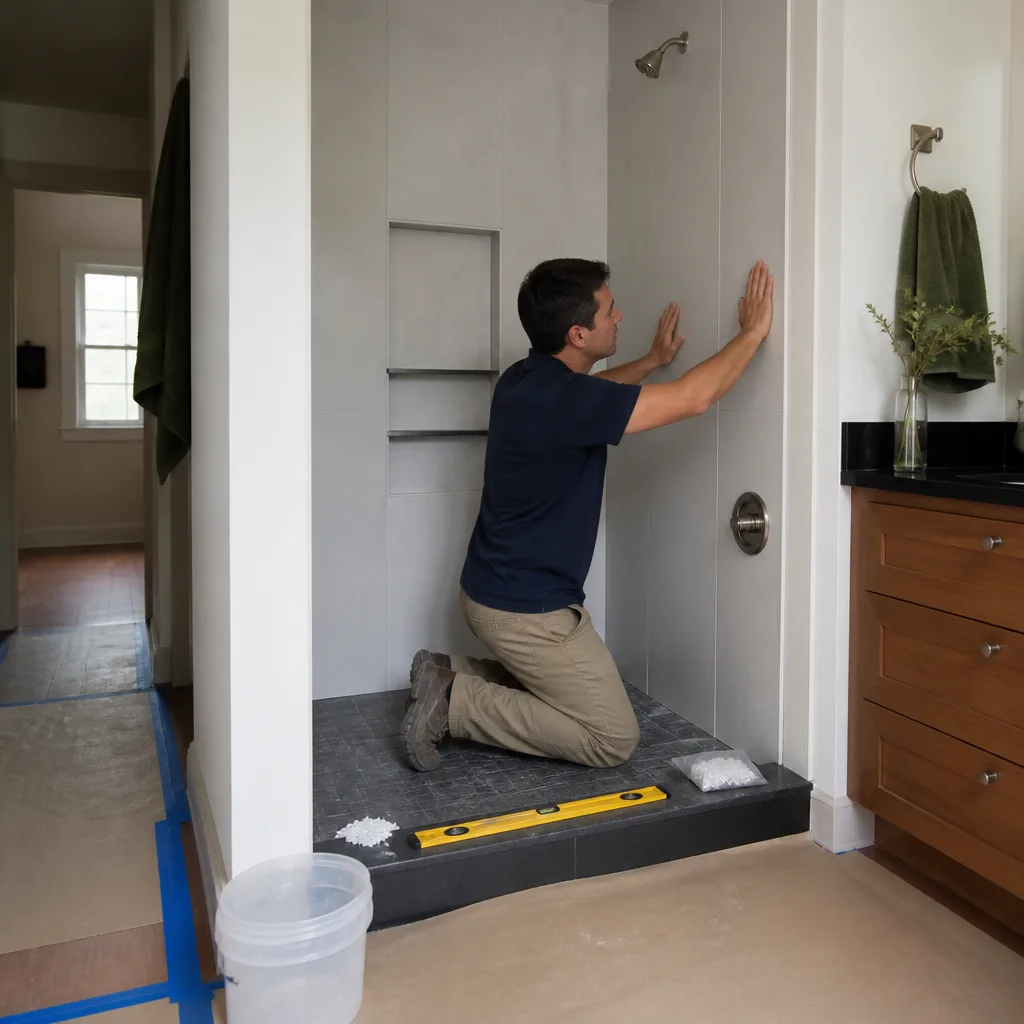
A proper shower or tub surround has a waterproofing layer behind the tile that keeps water out of the wall cavity. In a traditional build that’s a sheet-applied or liquid-applied membrane over cement backer board. In a modern build it’s a bonded waterproofing sheet, often a foam backer with a factory-applied membrane. Either one works. What doesn’t work is bare backer board with tile glued to it.
So the first thing to check on any bathroom bid is whether the word “membrane” or “waterproofing” appears at all. If it doesn’t, you’re looking at a contractor who’s either planning to skip it or planning to add it later as a change order. Neither is what you want.
Here’s what a real wet-area scope looks like:
- A named waterproofing product (sheet membrane, liquid membrane, or a foam backer system with manufacturer specs)
- Membrane coverage that extends at least to the shower curb and past the shower head wall
- Seams and corners treated with the manufacturer’s matching tape or sealant
- A flood test before tile goes down, for shower pans
- A pre-mixed thin-set or mortar specified by the waterproofing manufacturer, not a generic bag
We’ve opened Cutler Bay showers where the backer was screwed directly to the studs with no barrier at all. In this climate, a Cutler Bay bathroom can hold standing humidity for weeks in the summer. Water doesn’t need to leak to cause damage here; condensation behind tile is enough to rot framing and grow mold in a single wet season.
“Green Board” and Other Backer Board Shortcuts
Green board is moisture-resistant drywall. It’s allowed in some dry locations outside the shower proper. It is not a substrate for a wet-area shower. When a bid specifies green board inside the shower envelope, the contractor is either working from an outdated method or cutting material cost on the wrong end of the job.
The standard for a wet area is cement backer board, glass-mat backer, or a foam backer with a bonded membrane. All three are acceptable when installed per manufacturer instructions. Green board isn’t. Plaster or drywall with a painted-on “waterproof” coating also isn’t, unless the coating is a tested product applied over an approved substrate.
What to look for in writing:
- Cement backer board (a common brand is WonderBoard), glass-mat board (DensShield is typical), or a foam backer with membrane (like Schluter Kerdi-Board or Wedi)
- Thin-set specified as modified or unmodified per the backer manufacturer’s instructions, not chosen by the installer’s habit
- Backer board joints taped and bedded with thin-set, not joint compound
- Fasteners rated for wet areas and set flush to avoid tile lippage
You’ll also want the bid to specify the setting materials by brand. Quikrete and Sakrete both make suitable mortar and concrete products for bath floors and thresholds, and naming the brand is a sign the contractor is working from a real spec rather than a mental shopping list. Unbranded “mortar and backer” language in a written price is where corners hide.
Exhaust Fan Specs Nobody Puts in Writing
Every bathroom needs mechanical exhaust, and the fan needs to be sized to the room. The standard rule is at least 1 CFM (cubic feet per minute) per square foot of bathroom floor, with a minimum of 50 CFM for a standard bath. A 60-square-foot Cutler Bay bathroom needs a 60 CFM fan at minimum; a larger primary bath needs more.
Most low bids don’t specify the fan at all, or they list “new exhaust fan” without a number. That’s how a $30 builder-grade fan rated at 50 CFM lands in a 110-square-foot bath, runs for ten minutes after a shower, and leaves the room at 80% relative humidity for the rest of the day. In Cutler Bay, where outside air is already saturated through summer, the fan is doing most of the work of keeping the room dry. Undersizing it is a shortcut you’ll pay for in mold remediation later.
Check for:
- A CFM rating in the bid that meets or exceeds the room’s square footage
- A sone rating (noise) listed; 1.0 or lower is quiet, 3.0 is loud
- Ducted exhaust to the exterior, not into the attic
- A timer or humidity-sensing control, not just an on/off switch
If the contractor tells you the existing fan is fine without measuring the room or reading the label, that’s a tell. Ask what the CFM rating is. If they don’t know, they aren’t planning the ventilation.
How to Verify Wet-Area Tile Experience
Tile experience and wet-area tile experience are not the same credential. A tile setter who does beautiful kitchen backsplashes and fireplace surrounds may have never built a properly waterproofed shower. The two jobs share a material; they don’t share a method.
Ask directly, and ask for backup:
- Ask what waterproofing system they use on a shower. If the answer is “RedGard” or “Kerdi” or “Wedi,” they know the trade. If the answer is “we use a rubber pan liner,” that can be correct for traditional builds, but ask how the walls are waterproofed above the pan.
- Ask how many bathrooms they’ve done in the last 12 months. Not tile jobs, bathrooms. A crew that does 2-3 a month is fluent; a crew that does 2 a year is practicing on your house.
- Ask past customers for photos taken at the waterproofing stage, not just the finished tile. Anyone can photograph a finished shower. The photos you want show the membrane, the flood test, and the backer joints before tile.
- Ask one past customer this exact question: “How has the shower held up after two years?” A dry answer is the right answer. An enthusiastic answer about how pretty it looks is a deflection.
- Ask to see the manufacturer’s installation instructions for the waterproofing system they use, and ask if they follow them to the letter. A serious tile setter will tell you which details they follow and why.
When you hire through the Bathroom Remodeling in Cutler Bay service, the wet-area scope, membrane product, and backer spec all go in writing before the first tool comes out. That’s the difference between a promise and a paper trail.
The Permit Red Flag: When They Tell You to Skip It
In most jurisdictions, a full bathroom gut that moves plumbing, adds or relocates electrical, or changes the footprint requires a permit and inspections. A contractor who tells you a permit is “not necessary” for a full gut is either unlicensed for the trade or planning work they don’t want inspected. There’s no third option.
This matters more in a wet area than anywhere else in the house. Plumbing rough-in, drain slope, venting, and electrical GFCI protection in a bathroom are all code items that get checked at inspection. Skip the inspection and you skip the review that catches a shower pan that wasn’t flood-tested, a drain that’s barely sloped, or a fan vented into the attic.
What you should see from a by-the-book crew:
- The permit pulled in the contractor’s name, not yours
- Rough-in and final inspections scheduled as part of the project schedule
- Inspection reports shared with you at close-out, not just filed away
- Written change orders if the inspector flags anything
If the contractor discourages the permit because “it’ll slow us down” or “the county’s a nightmare,” ask them directly: are you licensed for plumbing and electrical, or are you planning to hire unlicensed subs? The answer is the whole reason they’re trying to avoid the inspection.
Vague Warranty Language vs. a Written Guarantee
“We stand behind our work” is not a warranty. It’s a sentence. A real warranty names what’s covered, for how long, and what the contractor’s response time commitment is. If the bid doesn’t say those three things in writing, the warranty doesn’t exist.
The differences to look for:
- Coverage list. Labor, materials, fixtures, tile, waterproofing, and any consequential damage caused by a failure. A good warranty spells out each.
- Term. One year is the common floor for a bathroom; two years or more is a signal the contractor trusts their own work. A lifetime warranty on tile is usually a marketing line, not a contract.
- Response time. How many days after you call does someone come out? A written number is enforceable; “as soon as possible” is not.
- Exclusions. Normal wear, acts of God, and damage from your own neglect are standard exclusions. A warranty that excludes “water damage” in a bathroom is a warranty that covers almost nothing that matters.
- Transferability. Whether the warranty passes to a new owner is a sign of how confident the contractor is in the build.
Bradford Remodeling carries the 365-Day Done Right Promise on every completed project. If the work fails inside that window, we come back and correct it at no charge, and the terms are in writing in your hand at close-out. That’s what a guarantee is supposed to look like: a document, not a slogan.
Subcontractor Disclosure and Insurance Certificates
Most bathroom remodels involve at least a plumber and an electrician, and sometimes a drywaller and a tile setter. A serious contractor will tell you upfront which licensed trades will be on site, name them, and confirm they’re covered by the contractor’s general liability and workers’ comp insurance.
Ask for the insurance certificate before work starts and check that it names the subcontractors. A certificate that lists only the general contractor leaves you exposed if the electrician who ran your GFCI circuit is uninsured and gets hurt on your property, or worse, does work that fails and isn’t covered by anyone’s policy.
Questions to ask before signing:
- Which licensed trades will be in my bathroom, and are they employees or subcontractors?
- Can I see the insurance certificate, and does it include the subcontractors?
- Who pulls the plumbing and electrical permits, the general contractor or the sub?
- If a sub’s work fails, who does the homeowner call?
Bradford Remodeling uses background-checked, uniformed technicians on every job, and the roster of trades is documented before the schedule is set. You know who’s walking through your door before the crew arrives.
Common Mistakes to Avoid
- Taking the lowest bid without checking the wet-area scope. A bid that’s $4,000 under the next one almost always has the membrane, the backer upgrade, or the permit missing from it. In Cutler Bay’s humidity, those three items are the difference between a bathroom that lasts and one that grows mold behind the tile.
- Trusting green board in a shower. Green board is not a wet-area substrate, no matter how many contractors install it. Ask for cement or foam backer in writing, and don’t let a verbal “we always do it that way” override the spec.
- Skipping the permit because the contractor says so. A full bathroom gut without a permit means no inspection of the plumbing rough-in or the electrical. That’s the check that protects you, and it’s a red flag if anyone tries to talk you out of it.
- Accepting “we stand behind our work” as a warranty. Get the coverage list, the term, and the response time in writing. Without those three, the warranty is a verbal handshake you can’t enforce.
- Not checking the exhaust fan CFM. A 50 CFM fan in a 100-square-foot Cutler Bay bath won’t move the moisture out. Undersized fans lead to mold behind the vanity and peeling paint on the ceiling within a season.
- Assuming the subs are on the insurance certificate. Ask to see the certificate and confirm the plumber and electrician are named. If they aren’t, you’re carrying the risk.
- Letting the schedule slide without a written change order. A two-week delay is negotiation; a two-week delay without a signed change order is how a $14,000 bathroom becomes a $22,000 bathroom with no paper trail.
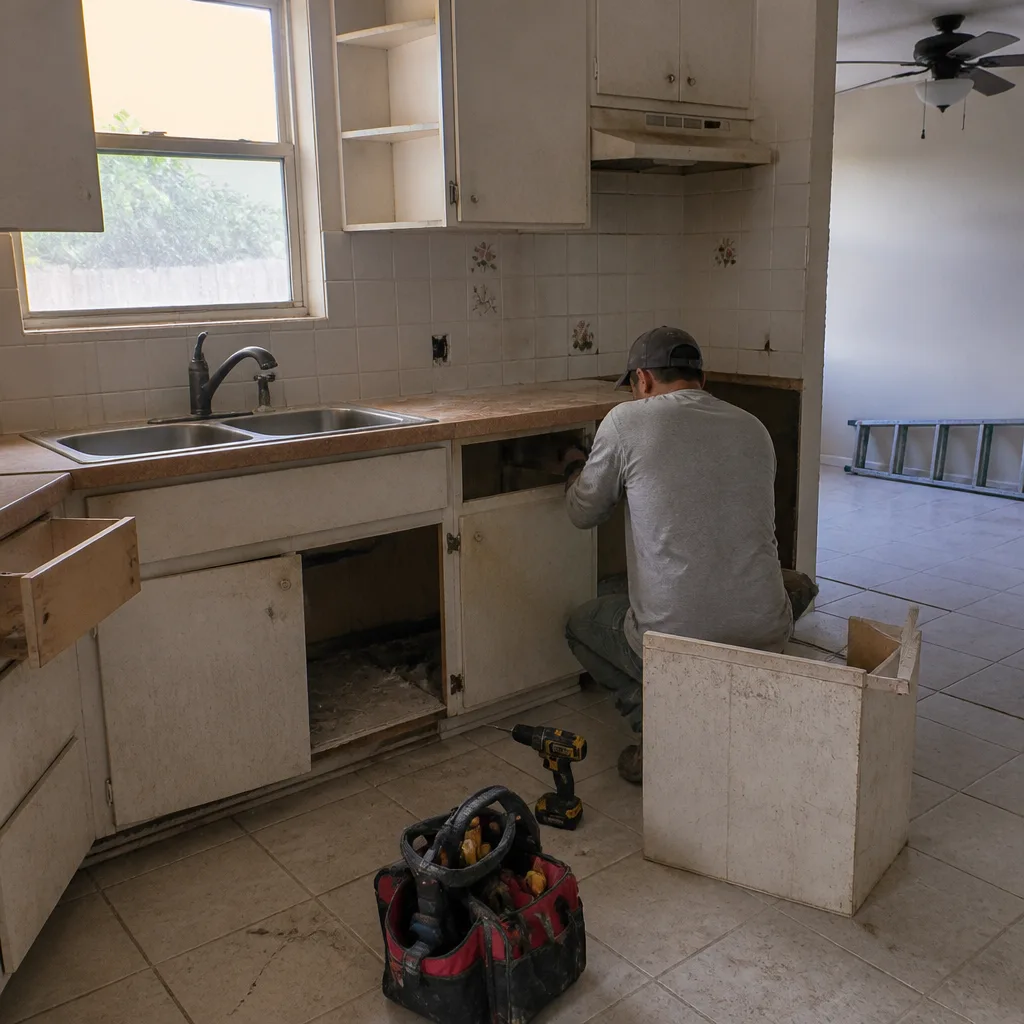
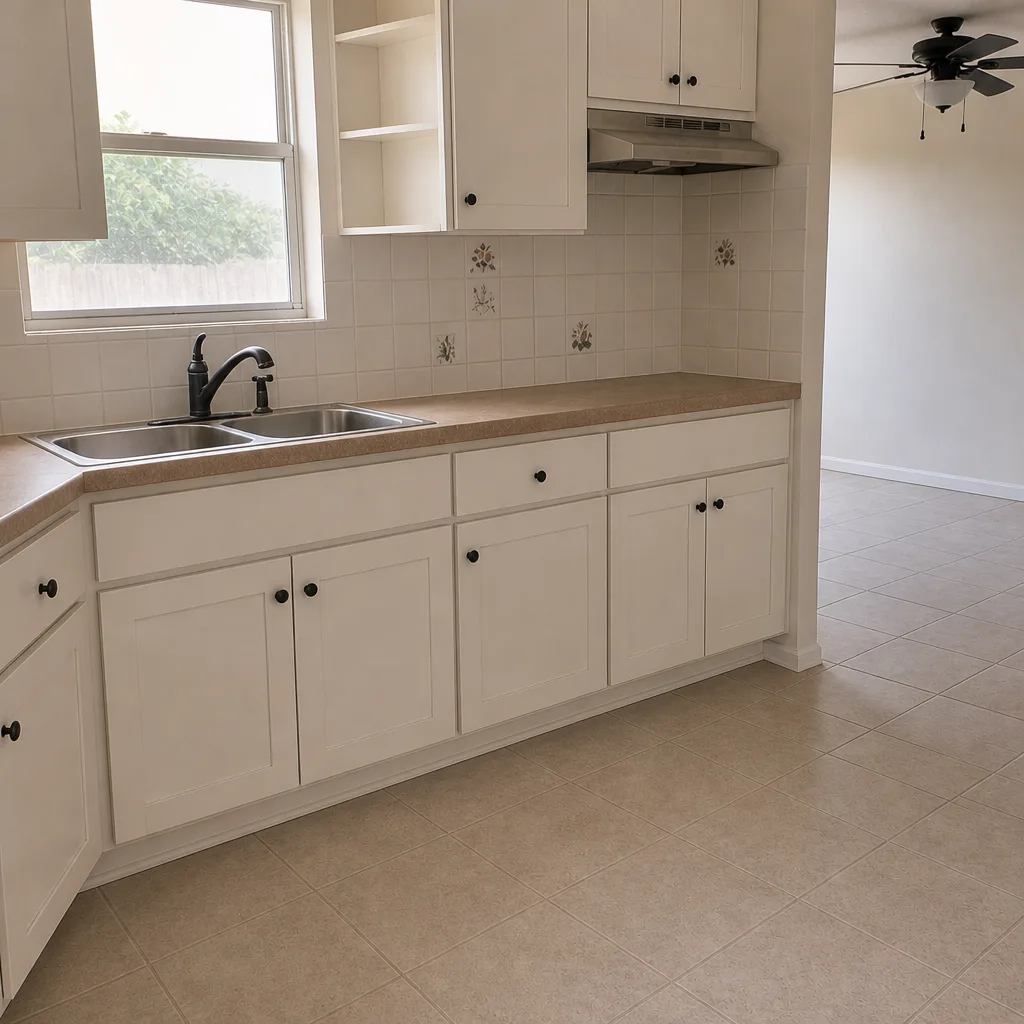
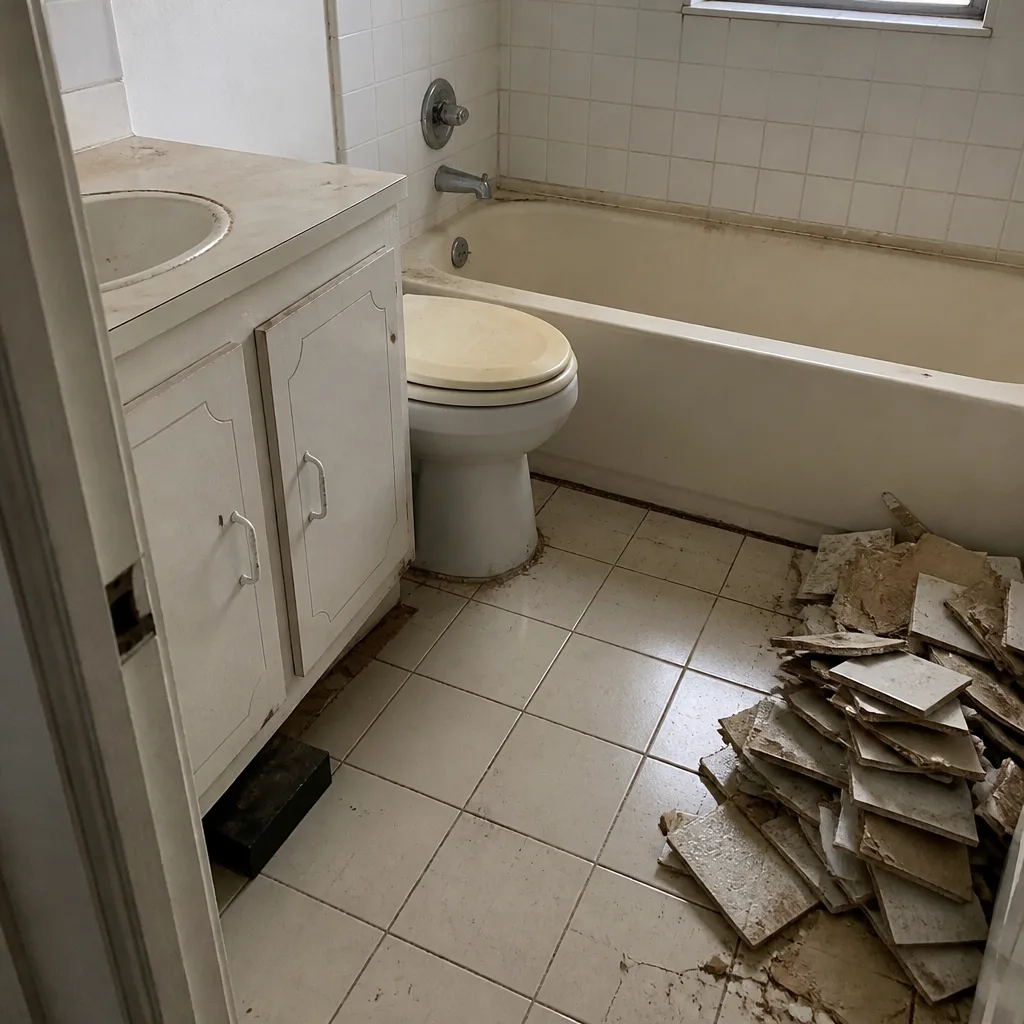
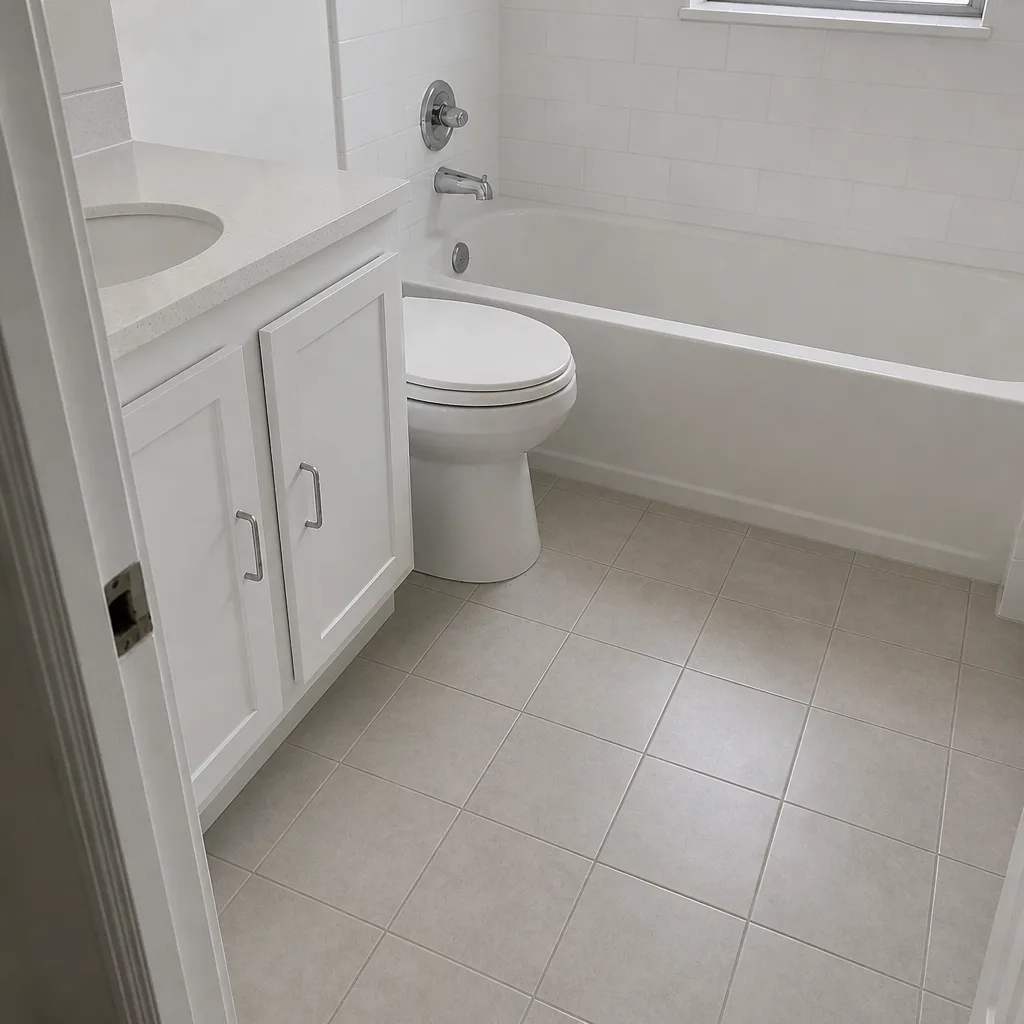
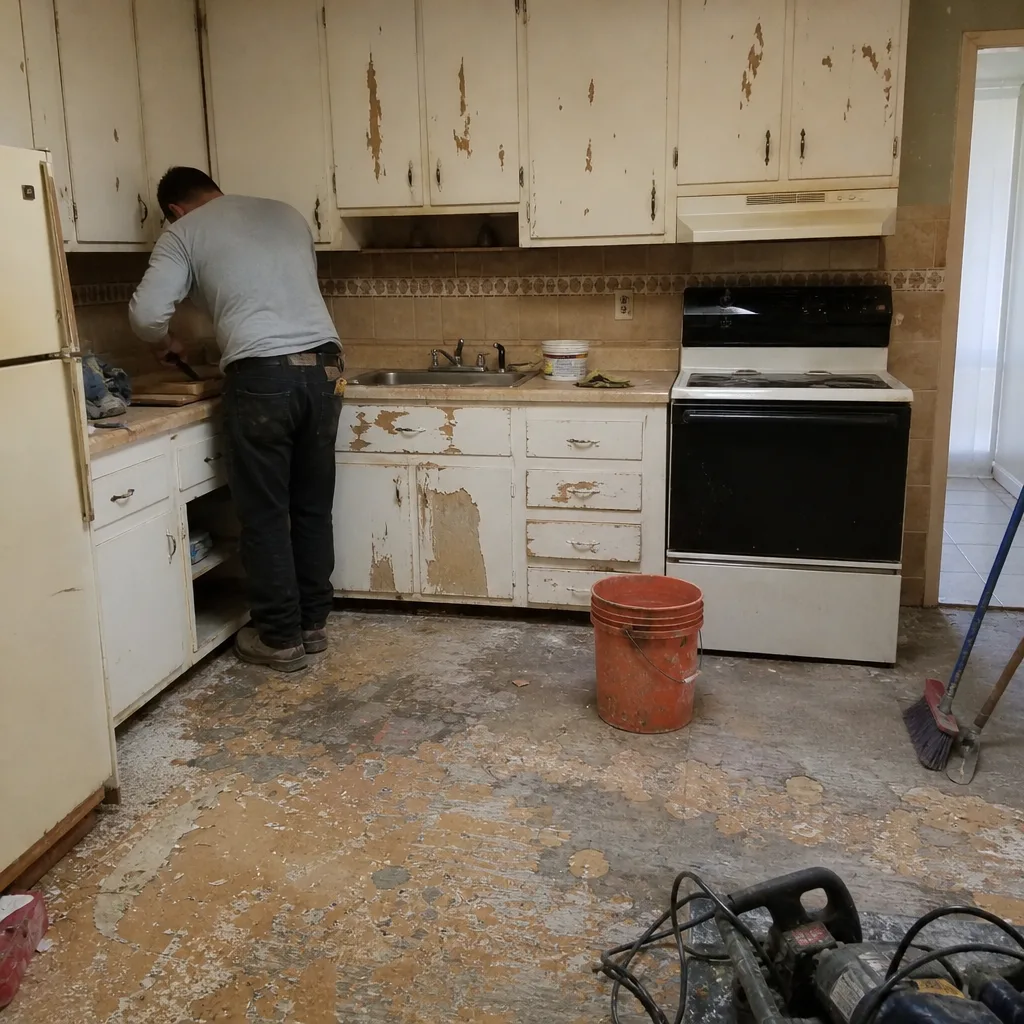
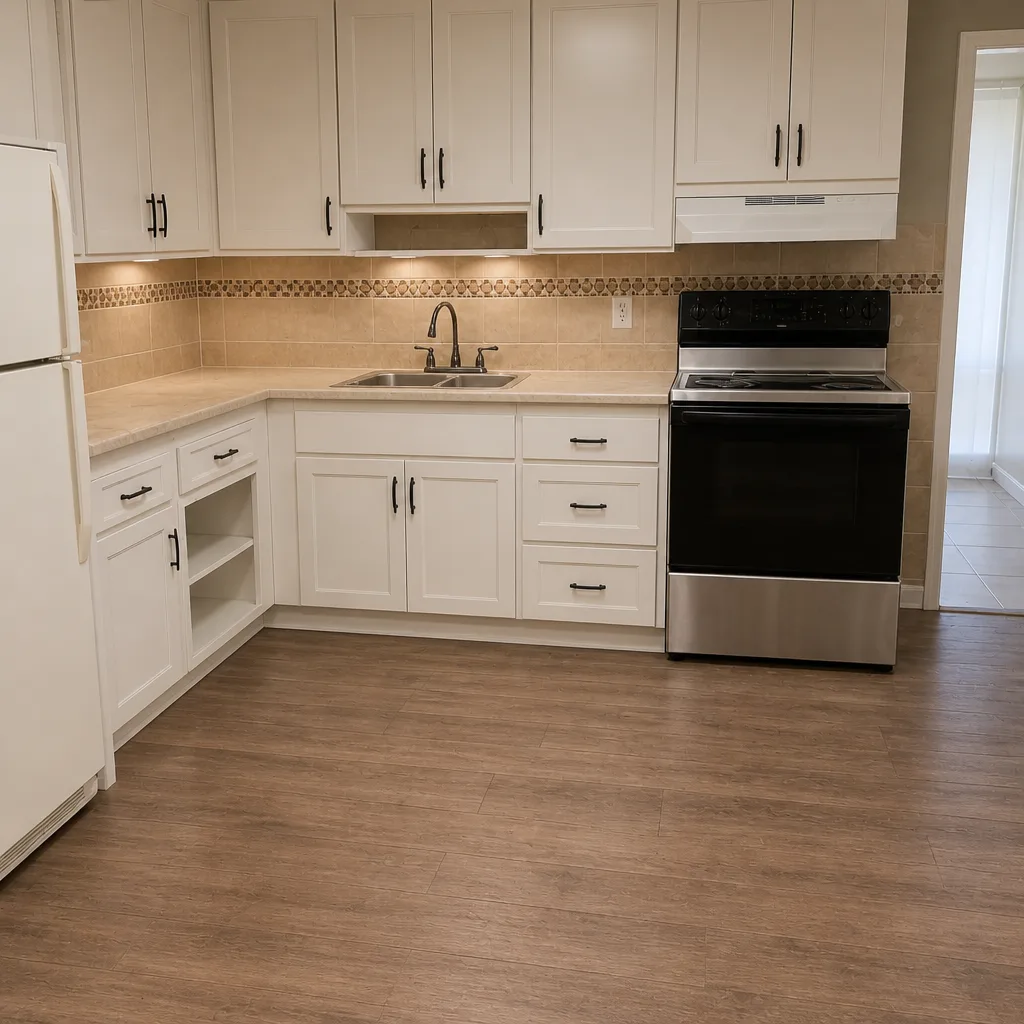
See the difference
 Before
 After
 Before
 After
 Before
 After
When to Call a Professional
Some bathroom red flags are worth a call the moment you spot them. If you’ve opened your shower wall or noticed a soft spot, a bulging tile, or a musty smell that returns after cleaning, call immediately. Water has likely been moving long enough to affect the substrate, and the wall needs to be opened to find the source. Same for a bid that arrives with no mention of membrane, backer spec, or permit; a second opinion before you sign is cheap insurance. And if you’ve already hired a crew and the work is failing inside the warranty window, read the warranty terms and call. Bradford Remodeling Co Cutler Bay offers free estimates in Cutler Bay. Call (833) 620-5491 and we’ll walk through your bathroom, your options, and a written price before any work begins.
Frequently Asked Questions
You usually can’t see the membrane from the finished tile, so the best proof is a photo taken at the waterproofing stage before tile went down, or a flood test report. The visible signs of a skipped membrane are soft or hollow-sounding tile, discolored grout lines near the shower floor, a musty smell that returns after cleaning, or bubbling paint on the wall behind the shower. If any of those are present, call (833) 620-5491 for a free moisture inspection and a written estimate for the repair.
No. Green board is moisture-resistant drywall, not a wet-area substrate. It’s allowed in some dry bathroom locations but not inside a shower enclosure, tub surround, or directly behind tile in a wet zone. The correct substrates are cement backer board, glass-mat backer, or a foam backer with a bonded waterproofing membrane. Cutler Bay’s summer humidity makes any shortcut here more likely to fail than in a dry climate.
It shouldn’t. A written price before work starts is the standard, and any reputable contractor should hold it when the scope is unchanged. Change orders are for scope additions you approve in writing, not for the contractor discovering the bathroom needs more backer halfway through the tile job. If the price moves without a signed change order, that’s a red flag. Call (833) 620-5491 for a written line-item estimate before you commit to anyone.
In most cases, yes, if the project moves plumbing, adds or relocates electrical, or changes the footprint. Even a cosmetic tile replacement may need a permit if it involves a new shower pan or backer board because both are wet-area assemblies. Confirm with your local building department, and be wary of any contractor who tells you a full gut doesn’t need one. Call (833) 620-5491 and we’ll walk through the permit scope for your project.
Three things: a list of what’s covered, the length of the term, and the contractor’s response time commitment. Coverage should include labor, materials, fixtures, tile, and waterproofing, and it should not exclude water damage caused by the contractor’s work. One year is the common floor. Bradford Remodeling carries the 365-Day Done Right Promise on every completed project, and the terms are written and given to you at close-out. Call (833) 620-5491 for details on your specific project.
A full gut bathroom typically takes three to five weeks for a standard-size Cutler Bay bath, longer for a primary bath with a tub-to-shower conversion or layout change. The schedule depends on permit review time, tile selection lead times, and whether plumbing or electrical rough-in is being moved. A written schedule before work starts is the way to protect your timeline. Call (833) 620-5491 to schedule a free estimate and a written scope.
The Bottom Line
Bathroom remodeling red flags are not the ones you see at the final walkthrough. They’re the ones written into a bid, or left out of it: no membrane, no backer spec, no CFM rating, no permit, no named subs, no written warranty terms. Any one of those is a reason to get a second estimate. Two or more in the same bid tells you what kind of job you’re buying. If you’re planning a bathroom project in Cutler Bay and want a written scope before work starts, call Bradford Remodeling Co Cutler Bay at (833) 620-5491 for a free estimate. We’ll put the price, the scope, and the 365-Day Done Right Promise in writing, and you’ll know exactly what you’re getting before a single tool comes out.
For the broader picture on how we approach every room in the house, start with the Bradford Remodeling Co Cutler Bay home page, then read up on our General Contractor in Cutler Bay service and our Kitchen Remodeling in Cutler Bay work. If your next project is a bath, the Bathroom Remodeling in Cutler Bay page above is where the scope and the written price start.
Written by the team at Bradford Remodeling Co Cutler Bay.